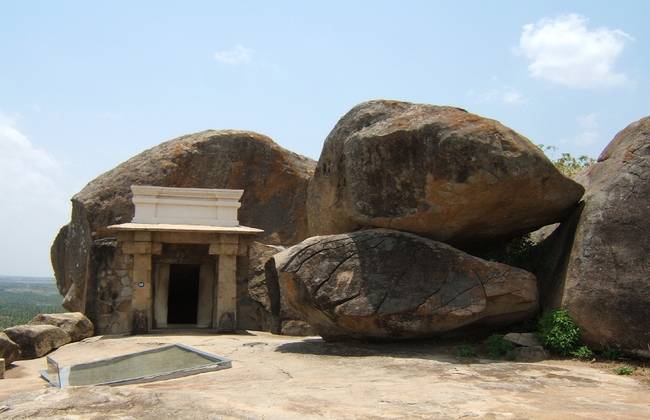
Development of cave temples
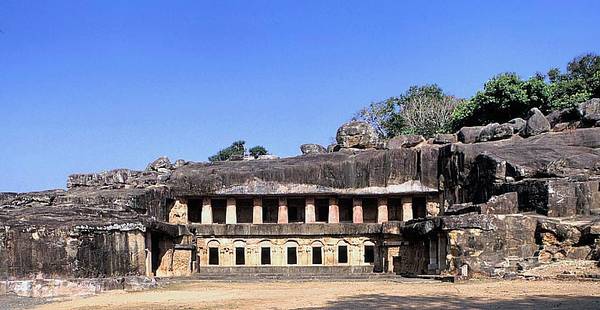
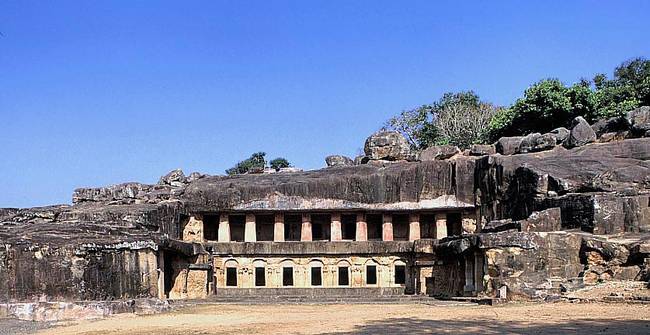
Rani Gumpha temple
Image by Takeo Kamiya © Takeo Kamiya
Some of the earliest dated Jain caves in the north-west of India are the monastic Bāvā-Pyārā Caves near Junagadh in Gujarat. Cut out of the rock, these caves have been firmly linked to Jain activities from the first centuries of the Common Era.
Predating these are the Jain caves at Khanda-giri and Udaya-giri in Orissa, which are among the earliest Jain remains on the east coast of India. King Khāravela’s inscription in the Hāthī-gumphā stems from the second century BCE and indicates the early Jain occupation of this site.
In central India, a cave dedicated to Pārśvanātha or Lord Pārśva, the 23rd Jina, at Udaya-giri, near Vidisha, bears an inscription from the early fifth century CE.
In the south of the country, cave remains in Tamil Nadu and Kerala date from as early as the second to first centuries BCE. Many early Jain caves in southern India were originally dwellings. During the seventh to ninth centuries CE they were altered and decorated, and stayed in continuous use until at least the 11th century.
Although temples built out of blocks of stone were introduced around the sixth to seventh centuries CE, the continued use of these caves shows that the Jains did not abandon their cave sites in favour of constructed temples.
Altering cave temples
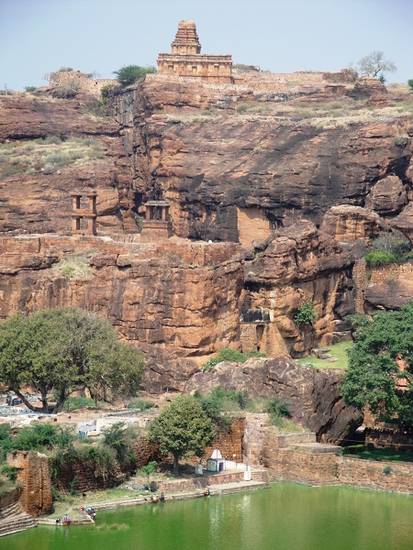
Badami cave temples
Image by olderock1 – Rakhee © CC BY NC ND 2.0
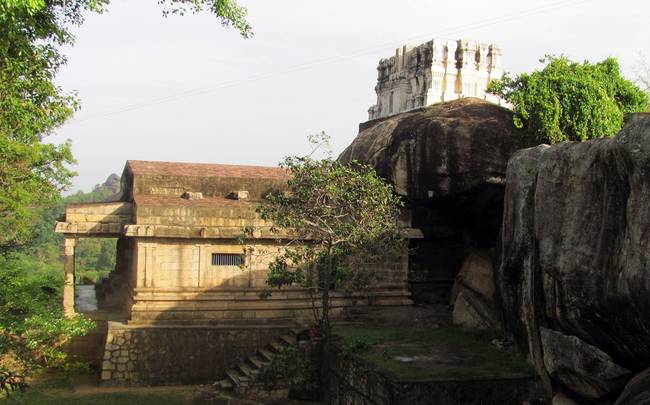
From at least the seventh century, natural caves were often enlarged and entirely artificial ones created. Probably the best-known Jain cave, which is believed to be completely man-made, is the ninth-century cave overlooking the lake at Badami in Karnataka.
At other sites, cavities were extended into the natural rock at the back. One example is the large cave at Mammandur in Tamil Nadu.
Even during later periods, the Jain faithful continued to excavate cave sites. One instance is the Jain rock-cut temple at Tringalvadi near Nasik in Maharashtra, which was begun in the 14th century.
From about the ninth century, Jains also created positive architectural shapes by decorating the outside of huge boulders and carving away the surface of entire mountain ranges to create temple structures that are cut into the rock but not caves. The most prominent example is the monolithic temple at Ellora in Maharashtra, known as the Choṭā Kailāśa Temple or Jain cave number 20. It is smaller than the famous Hindu Kailāśanātha Temple – cave number 16 – at the same site, but it follows the same principle of creation.
Porches for cave temples
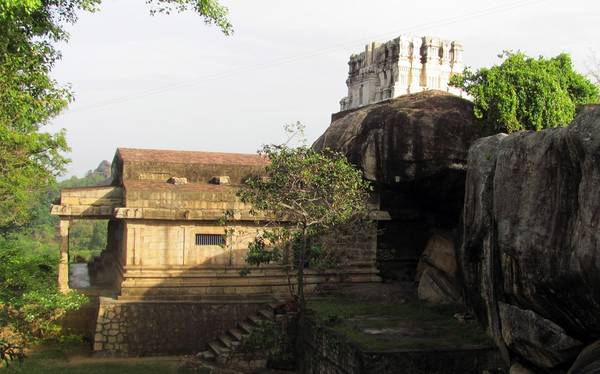
Bhagavati cave temple
Image by Aviatorjk © CC BY-SA 3.0
Porches were frequently added to the front of cave temples. There are examples of entire temple halls being raised in front, with the cave comprising only the sanctum – known as the garbha-gṛha.
Many caves had porches of wood or other less durable materials. Good examples can still be seen at Gwalior in Madhya Pradesh and at Kalugumalai in Tamil Nadu. Today, post holes carved into the terraces and facades of many caves are the only signs left of porches made of materials that have been destroyed over time.
In central India especially, many Jain cave temples had porches in stone. Examples can be seen at:
- Gajpantha in Maharashtra
- the bottom of the twin peaks of Maṅgī and Tuṅgī, also in Maharashtra
- the cave at the bottom of the hill at Sittanavasal in Tamil Nadu.
Decorations of cave temples
Numerous cave temples boast religious art. Many house sacred objects of worship, ranging from simple foot imprints of the Jinas and other saintly teachers to highly elaborate statues, often with inscriptions.
Most images have been carved out of the cave wall either in relief or, more rarely, as free-standing figures. Examples of painted or tiled interiors of cave temples sometimes occur. Icons are also found on rocks and cliff faces outside cave temples, especially in southern India.
Icons inside cave temples
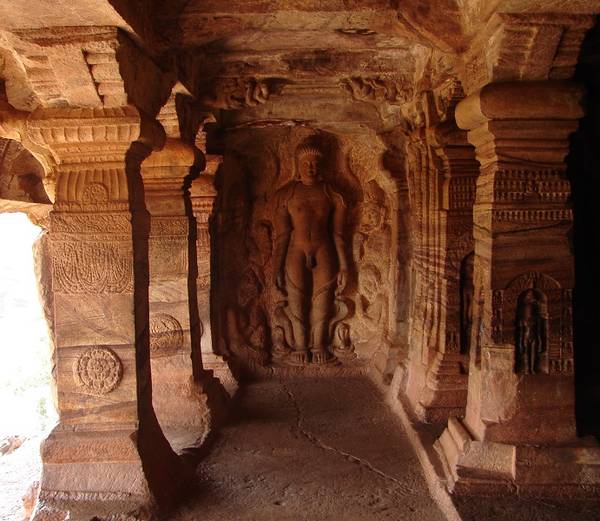
Bāhubali in the Badami cave temple
Image by Dinesh Kannambadi © CC BY-SA 3.0
Many earlier caves have been greatly altered and adorned with carved Jain icons. Such representations can be very simple, almost giving the impression of an aniconic veneration of the sacred ground of the caves. Other depictions are more clearly figural and include images of the 24 Jinas as well as their yakṣas, yakṣīs and other attendants.
In most cases, the statues have been carved out of the natural rock of the caves, as is the case at Khanda-giri in Orissa and at a Jain site of the same name near Canderi in Uttar Pradesh. The images have often been combined with inscriptions, illustrated by the Sonbhaṇḍār Caves at Rajgir in Bihar.
In other cases, loose sculptural representations have been set into niches in the walls of caves. These may be plaques of reliefs but are usually free-standing statues of just one figure or of one flanked by attendants. Although this is relatively rare, examples can be seen in the cave at Gajpantha in Maharashtra.
Other decorations inside cave temples
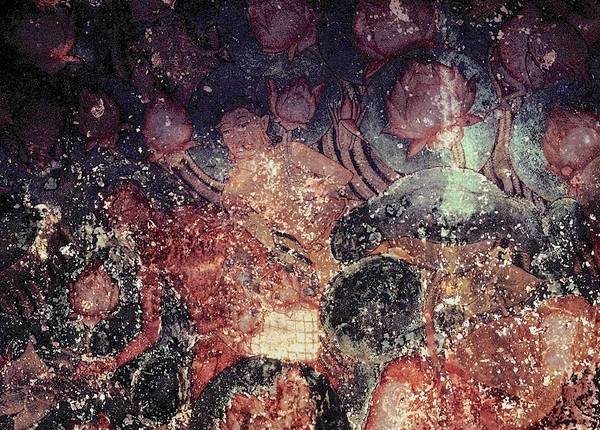
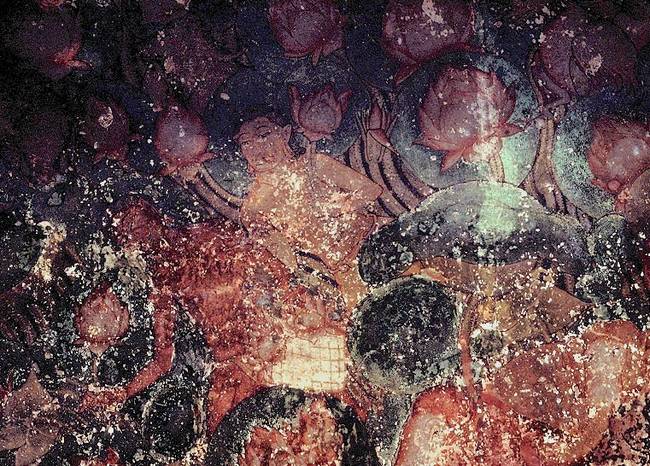
Ceiling of Sittannavasal cave temple
Image by Takeo Kamiya © Takeo Kamiya
Some caves, such as those at Sittanavasal in Tamil Nadu and Ellora in Maharashtra, have elaborately painted ceilings. In addition, the pillars and certain statues inside still bear remains of coloured pigments.
From about the 16th century, ceramic tiles were also used to adorn earlier caves, such as those surrounding the twin peaks of Maṅgī and Tuṅgī in Maharashtra.
Icons outside cave temples
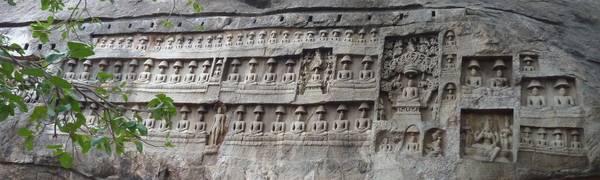
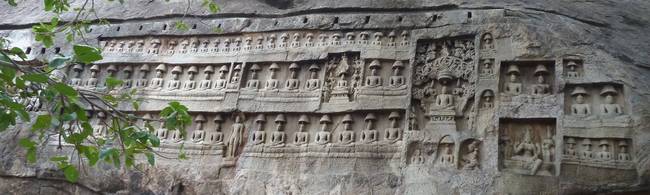
Reliefs of Jinas
Image by Balajijagadesh © CC BY-SA 3.0
A tradition of creating Jain icons outside cave temples was particularly popular in the south of India. Many images have been carved on boulders and rocky cliffs. Boulder carvings can be seen at Tirakkol in Tamil Nadu while figures carved in the rock face are found at:
- Śravaṇa Beḷgoḷa in Karnataka
- Chitral in modern-day Pakistan
- Raya Durg in Andhra Pradesh.
Religious importance of cave temples
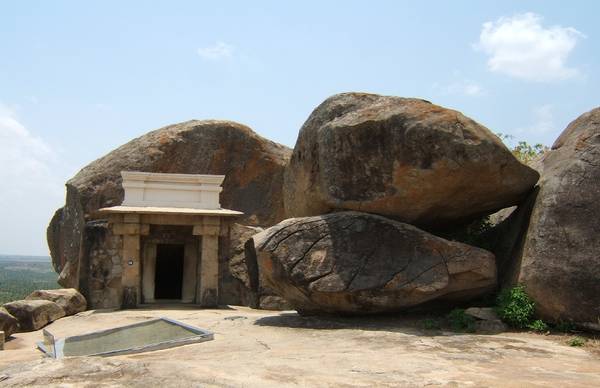
Bhadrabāhu’s cave
Image by Ilya Mauter © CC-BY-SA-2.5
In South Asia, mountains are generally regarded as hallowed places. In Jainism, hills and mountain peaks have regularly been linked with the enlightenment of Jinas and other important teachers and personalities. In Jain caves, the religious importance of hills is coupled with the sacredness of holy ground. Natural caves are regarded as self-created divine places, and even those which have been made by hand are considered to be spaces removed from the routines of worldly life.
As well as these religious connotations, caves have a comfortable, balanced climate. They are cool in the summer months and warm during the cold winter period. These reasons account for the continued importance of cave sites throughout India.
The religious importance of caves as retreats and meditation places for Jain ascetics is still strong in the present day. Countless Jain caverns are pilgrimage sites and it is noteworthy that it usually is the legendary association with an important Jain personality and not the artistic beauty and complexity of such caves that underlie their popularity. Most ritually important cave sites have not been greatly altered architecturally, but are associated with the meditation and enlightenment of particular Jinas and Jain teachers. These caves are considered sacred because they are places of enlightenment – mokṣa-sthānas. Examples include the enlightenment cave of:
- the 12th Jina, Vāsupūjya, on Mandar Hill in Bihar
- Bhadrabāhu on Candra-giri at Śravaṇa Beḷgoḷa in Karnataka.
Other natural caves are not sacred by association, however, and are used today by both ascetics and lay people for temporary religious retreats, such as the meditation caves at Taranga in Gujarat and on Ponnur Hill in Tamil Nadu.