

Description
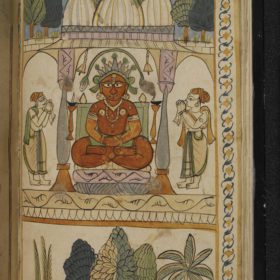
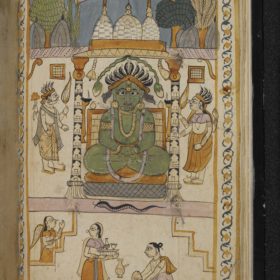
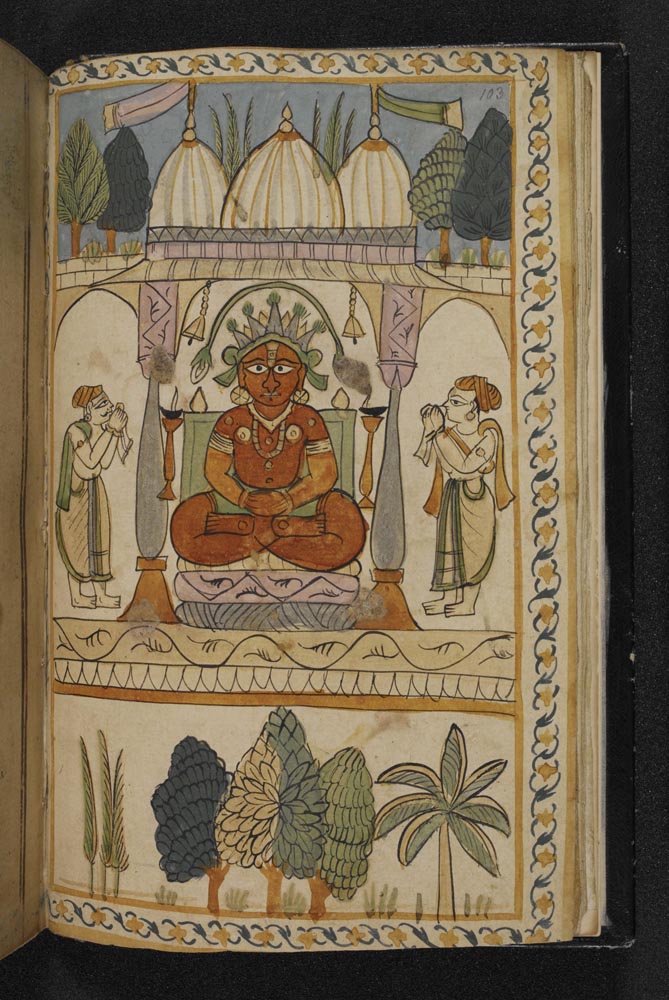
A large brown figure sits on a throne in a three-domed temple structure, two flags flying from two of the domes. Sitting in the lotus posture of meditation, he wears an intricate headdress and jewellery. There are lamps on his left and right sides while above him are small bells. Above his head is a kind of double-ended lotus stalk, which is an ornament and probable symbol of purity.
He is flanked by a male figure on each side. They have hands folded in a gesture of homage and respect.
Below are trees of various kinds, suggesting an outdoor scene. This is the place found in other pictures in the album, where temple servants and devotees are shown preparing ingredients for ceremonies of worship.
Thus this lively painting features two scenes in one, namely the:
- interior of a temple
- landscape surrounding the temple, depicted through the sky and trees.
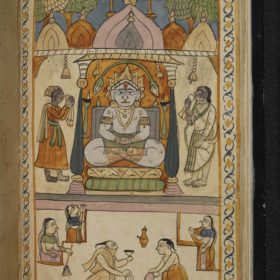
Inside the main cella of the temple a Jina is enthroned, and being worshipped. This Jina cannot be identified for sure, in the absence of any identifying emblem. His identification as Ṛṣabhanātha or Lord Ṛṣabha, the first Jina, cannot be more than a guess. The throne is where the emblem is usually found but here it is filled with only decorative motifs.
The figures on the Jina’s left and right sides are lay devotees worshipping him.
The painter does not use perspective, but does represent the journey through the landscape to the temple and then inside. The temple garden is presented first, followed by the interior of the temple.
Other visual elements
This is a full-page painting. The elaborate floral border of the picture underscores the decorative nature of the image.