Background
The Kalpa-sūtra is the most frequently illustrated Jain text of the Śvetāmbara sect. It is read and recited by monks in the festival of Paryuṣaṇ, which takes place in August to September each year.
The first part of the Kalpa-sūtra deals with the lives of the Jinas, especially Mahāvīra, Pārśva, Nemi and Ṛṣabha. It features almost identical stories of their births, lives as princes and then their renunciation, enlightenment and emancipation.
The second part – Sthavirāvali – is a praise of the early teachers of Jainism. The third part – Sāmācārī – deals with particular monastic rules to be followed during the rainy season.
Assorted folios
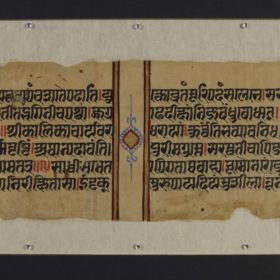
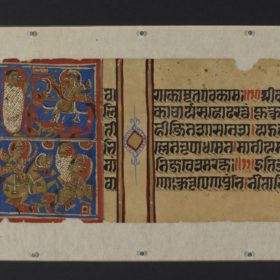
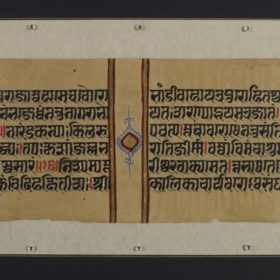
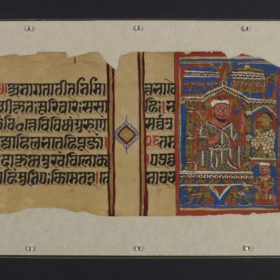
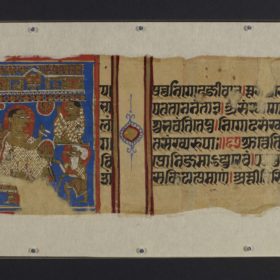
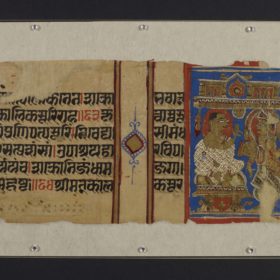
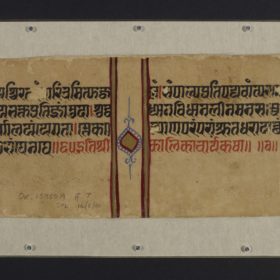
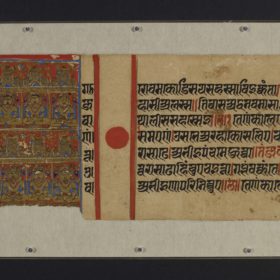
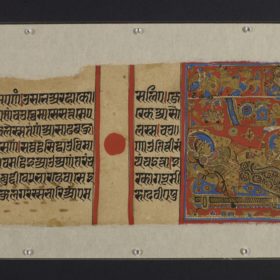
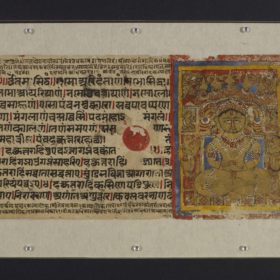
The pages or folios under this shelfmark belong to different manuscripts. The folios show a variety of handwriting, language and artistic style and are on noticeably different paper.
The folios are from four separate manuscripts, as follows:
- several folios are from a single manuscript of the Kālakācārya-kathā – Story of the Ācārya Kālaka
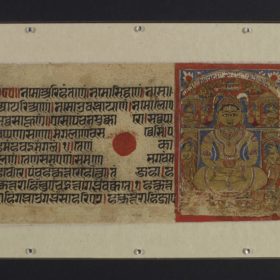
- three folios are from different manuscripts of the Kalpa-sūtra, an extremely popular text in the Śvetāmbara canon.
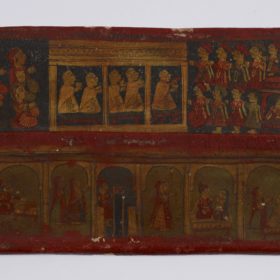
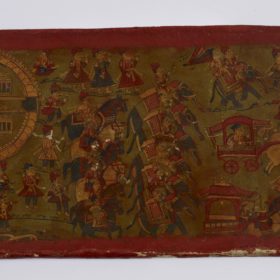
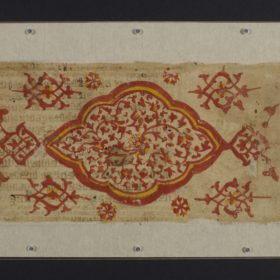
There is also a manuscript holder made for an unknown manuscript.
It is not known what has happened to the rest of each manuscript.
Copies of the Kalpa-sūtra and Kālakācārya-kathā are often made in a single manuscript, which may be why these folios were bundled together. At some point in the past these folios and the manuscript holder were put into a box at the British Library and labelled ‘Frags. of Jain Mss. Skt. / Pkt.’ meaning ‘Fragments of Jain manuscripts in Sanskrit and Prakrit‘. However, it is important to remember that they do not belong together.


Blank first page of Kalpa-sūtra