Category:Fragments of Jain manuscripts (Or. 13950)

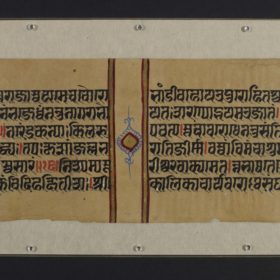
Stanza 65 – text ends

Description

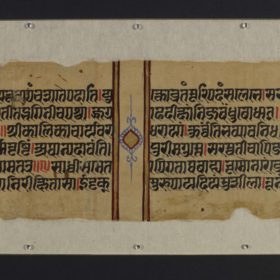
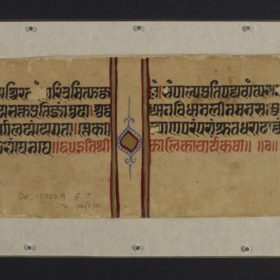
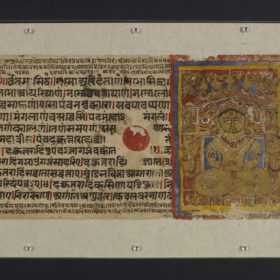
This is the end of the text. This is indicated in the last line. The phrase written in red gives the title of the Sanskrit work as Kālikācārya-kathā – Story of the Monk Kālaka.

Other visual elements

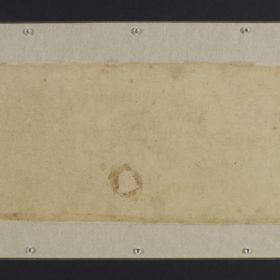
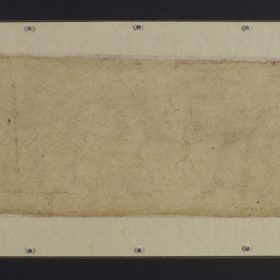
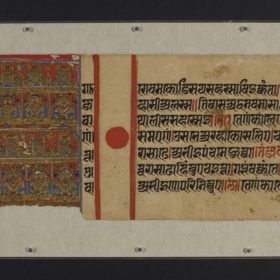
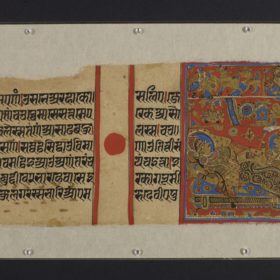
There are several notable things about this page, which is not in perfect condition as the edges are slightly torn.

The Kālaka story is often an appendix to Kalpa-sūtra manuscripts. In many Kalpa-sūtra manuscripts, there is a clear intention to make the manuscript a valuable and remarkable object in itself. This often holds true for the manuscripts of the Kālaka story as well. Here this aim is signalled by the:

  • shape and style of the script, which is close to calligraphy
  • use of gold ink for the red-edged border lines and ornamental diamond shape
  • division of the text into two equally-sized panels, separated by a 2-centimetre margin containing a golden diamond
  • blue ornamental motifs around the golden diamond in the centre.

There is a single ornamental diamond because this is the recto side of a folio.

This version of the Kālaka story is told in poetry. Verse numbers are at the end of each stanza. They are often in red, like here. On this page number 65 is seen on the last line.

Script

The elaborate script used is the Jaina Devanāgarī script, which is here like calligraphy. There are a few notable features of this script.

Firstly, it is an old type in the way the sounds e and o are notated when used with a consonant, known as pṛṣṭhamātrā script.

There are red vertical lines within the text marking out verse divisions. Single red vertical lines indicate where a verse is divided in two, while double red vertical lines are found at the end of the verse.

Background

The Kālakācārya-kathā – Story of the religious teacher Kālaka – emphasises the connection between religious practice and magical abilities. As an accomplished Jain teacher, Kālaka can master various magical sciences and transmute brick into gold. He uses his powers to help the Śakas, a foreign population. In exchange, the Śakas help him destroy the wicked King Gardabhilla.

This eventful tale belongs to the Śvetāmbara Jain tradition. It is known in several versions in various languages and is often illustrated.The one in this manuscript is an anonymous text in Sanskrit verse, but the first seven stanzas are missing. Also missing are folios 191 to 197, corresponding to stanzas 33 to 61.

This version is known as Śrīvīra-vākyānumatam from its starting words. It is a short recension, where the story is told in simple language without poetical embellishments. By an unknown author, it is one of the most popular versions of the Kālaka story.

Assorted folios

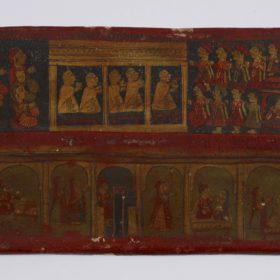
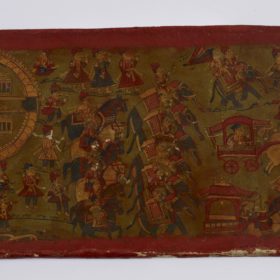
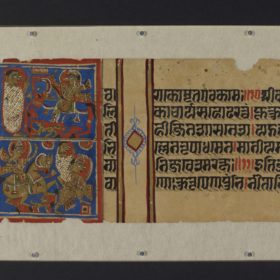
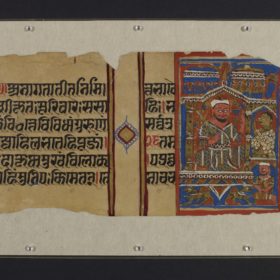
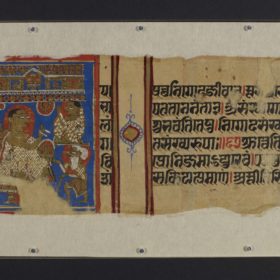
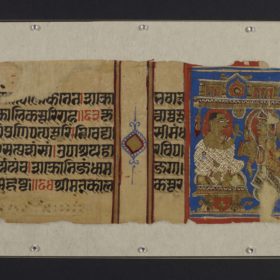
The pages or folios under this shelfmark belong to different manuscripts. The folios show a variety of handwriting, language and artistic style and are on noticeably different paper.

The folios are from four separate manuscripts, as follows:

  • several folios are from a single manuscript of the Kālakācārya-kathā – Story of the Ācārya Kālaka
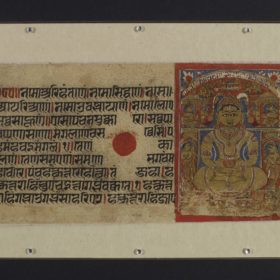
  • three folios are from different manuscripts of the Kalpa-sūtra, an extremely popular text in the Śvetāmbara canon.

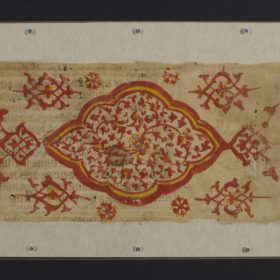
There is also a manuscript holder made for an unknown manuscript.

It is not known what has happened to the rest of each manuscript.

Copies of the Kalpa-sūtra and Kālakācārya-kathā are often made in a single manuscript, which may be why these folios were bundled together. At some point in the past these folios and the manuscript holder were put into a box at the British Library and labelled ‘Frags. of Jain Mss. Skt. / Pkt.’ meaning ‘Fragments of Jain manuscripts in Sanskrit and Prakrit‘. However, it is important to remember that they do not belong together.

Transcription

[198 verso: 6. śrīmat-Kālaka-sūra-]

1. yaś cirataraṃ cāritram atyujjalaṃ /  sampālya pratipadya cāntya-sama-
2. ye-bhakta-pratiṛñāṃ mudā / śuddha-dhyāna-vidhāna-līna-manasaḥ svar-
3. ggālayaṃ ye gatās / te kalyāṇa-paramparā-śrutadharā yacchaṃ-
4. tu saṃghe ‘naghe // 65 //
iti śrī-Kālikācārya-kathā //  //

The end of the work is a praise to the teacher Kālaka.

Translation

1. After having lived an extremely brilliant life for a long time, the glorious teacher, at the ultimate hour,
2. joyfully assumed giving up food [= fasting to death], and, his mind absorbed in the accomplishment of pure meditation,
3. he went to heaven. May this possessor of scriptural knowledge provide a wealth of beneficial things
4. to the perfect monastic community!
Thus ends the story of the teacher Kālaka.

Translation by Nalini Balbir

Related Articles

Knowledge

How to read a Jain manuscript

Monks and nuns

Jain Beliefs

Śvetāmbara

Paryuṣaṇ

Jain calendar

Śvetāmbara Mūrti-pūjaka

What is a Jain manuscript?

Related Manuscripts