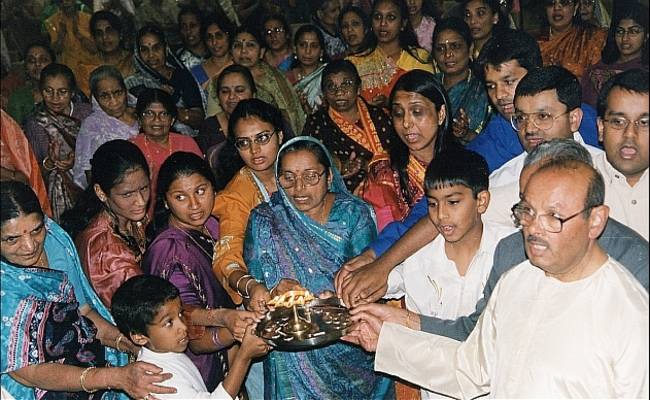
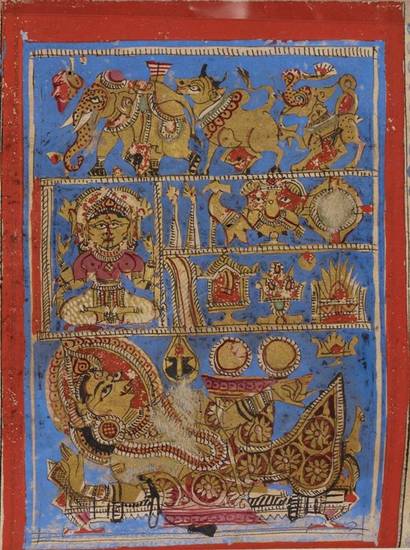
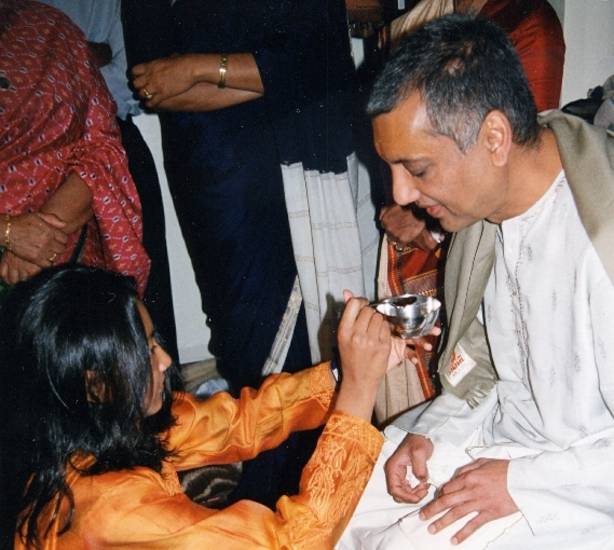
Paryuṣaṇ is the most important Śvetāmbara Jain festival. It falls in late August or early September on the cusp of the months Śrāvaṇ and Bhādarvā, and lasts eight days.

This festival begins the winding down of the year in the traditional calendar. The end of the old year and the start of the new year is celebrated at Divālī some weeks later.

Paryuṣaṇ features increased ritual observance and participation, particularly in sermons and fasting. Public recitation of the Kalpa-sūtra, fasting and restricted eating, greater focus on religious obligations, and auctions centred around religious objects or activities to raise funds are all characteristics of this festival. Communities celebrate Paryuṣaṇ in activities at both the temple and at home. It is an important public event that demonstrates active membership of both a local congregation and the wider sect of Śvetāmbara Jains.

Digambara Jains celebrate a similar festival called Daśa-lakṣaṇa-parvan, beginning the day after Paryuṣaṇ is completed.
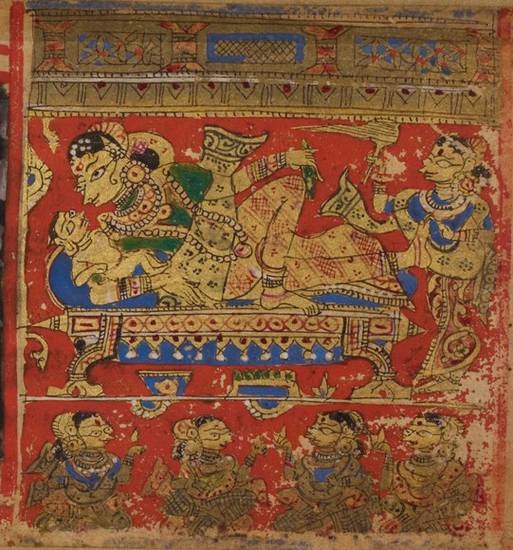
Absent Lord: Ascetics and Kings in a Jain Ritual Culture

Lawrence A. Babb

Competing to Give, Competing to Get: Gujarati Jains in Britain

Marcus Banks

Organizing Jainism in India and England

Marcus Banks

Śvetāmbar Mūrtipūjak Jain Scripture in a Performative Context

John E. Cort

Jains in the World: Religious Values and Ideology in India

John E. Cort

The Jain merchant castes of Rajasthan: Some aspects of the management of social identity in a market town

Christine M. Cottam Ellis

History, Scripture and Controversy in a Medieval Jain Sect

Paul Dundas

Scripture and Community: Collected Essays on the Jains

Kendall W. Folkert

The Archetypal Actions of Ritual: A Theory Illustrated by the Jain Rite of Worship

Caroline Humphrey, James Laidlaw

Heroic Wives: Rituals, Stories and the Virtues of Jain Wifehood

M. Whitney Kelting

Singing to the Jinas: Jain Laywomen, Maṇḍaḷ Singing and the Negotiations of Jain Devotion

M. Whitney Kelting

Tournaments of Honor: Jain Auctions, Gender, and Reputation

M. Whitney Kelting

Riches and Renunciation: Religion, Economy and Society among the Jains

James Laidlaw

Honour, Nurture and Festivity: Aspects of Female Religiosity amongst Jain Women in Jaipur

Josephine Reynell

Renunciation and Ostentation: A Jain Paradox

Josephine Reynell

Women and the Reproduction of the Jain Community

Josephine Reynell

Religious Practice and the Creation of Personhood among Śvetāmbar Mūrtipūjak Jain Women in Jaipur

Josephine Reynell

Guardians of the Transcendent: An Ethnography of a Jain Ascetic Community

Anne Vallely

Mahāvīr Janam Divas celebration

This YouTube slideshow of the celebrations of Paryuṣaṇ in Melbourne, Australia in 2010 illustrates some of the features of the eight-day long festival. Sculptures of the 14 auspicious dreams experienced by Mahāvīra’s mother are suspended from the ceiling on the fifth day of Paryuṣaṇ – Mahāvīr Janam Divas, which celebrates the birth of Mahāvīra, the 24th Jina. The sculptures are venerated in turn by all the festival participants, sometimes by being held to the crown of the head, seat of spirituality in Indian culture. Then auctions – bolī – are held to decide who should perform various ceremonies. The most important and expensive auction is over the right to take home the image of the infant Mahāvīra for the last three days of the festival. Everyone can rock the cradle holding the idol of the baby Jina, which takes pride of place in the display.

http://www.youtube.com/watch?v=36qDitIqS00

Paryuṣaṇ recipes

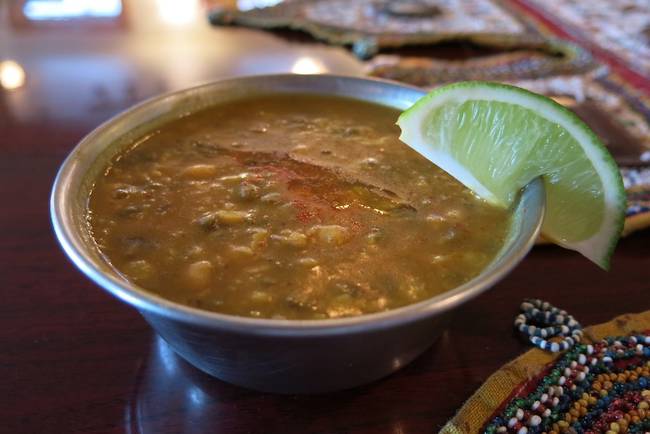
Recipes suitable for cooking during the Śvetāmbara festival of Paryuṣaṇ from the ramkicooks blog. During this annual festival of eight days, observant Jains tend to follow stricter than normal rules regarding food. Most families give up fresh vegetables, eating only grains, pulses and dairy produce. Taking additional vows to fast completely or partly for any given day of the festival, particularly the first and last days, is common.

http://bp2.blogger.com/_omh5NVW1jAg/SISQmzlhjKI/AAAAAAAAAW4/LtJQ1uGgr9U/s1600-h/Paryusyan-Jain-recipes.jpg

Re-enactment of the story of Candanabālā

This slideshow displays the re-enactment of the story of Candanabālā, who offered Mahāvīra appropriate food to break his fast. Sold into slavery, the beautiful princess has her lovely hair chopped off and is starved for three days. Even so, her first act when released is to offer alms to a passing mendicant. He is Mahāvīra, who becomes the 24th Jina, and he has been fasting for nearly six months. Candanabālā’s act of selfless charity despite her suffering causes her hair to be restored and her true identity revealed. The story of this virtuous woman – one of the soḷa satī – emphasises the importance of offering alms correctly. Acting out such stories is an important part of many Jain festivals. This re-enactment on YouTube was performed by Śvetāmbara Jains in Melbourne, Australia during the festival of Paryuṣaṇ in 2010.

http://www.youtube.com/watch?v=vO4tU0lvVTw

Paryuṣaṇ in the United States

The Pluralism Project at Harvard offers a short essay on the festival of Paryuṣaṇ, called ‘Paryushan and the Festival of Forgiveness’. It focuses on contemporary Jainism in the United States.

https://pluralism.org/paryushana-and-the-festival-of-forgiveness

Svastika during Paryuṣaṇ

A svastika formed out of traditional clay lamps – dīpas in Sanskrit – is arranged on the petal-strewn floor of a temple during the festival of Paryuṣaṇ. The svastika is an ancient symbol of good luck and is frequently found in Jain temples, on religious equipment and on books, clothing and so on. The four dots among the arms of the svastika represent either the four states of existence or the parts of the fourfold community. Lasting eight days in late August or early September, Paryuṣaṇ is the most important Śvetāmbara Jain festival. This photograph on Flickr was taken in 2007.

http://www.flickr.com/photos/vikasgnayak/1391786612/

Supreme Court upholds a Paryuṣaṇ ban

Details of the Supreme Court of India’s 2008 ruling to uphold the state government of Gujarat’s ban on the operation of slaughterhouses and butchers during the Jain festival of Paryuṣaṇ. The CAclubindia.com provides this information in its Judiciary section.

http://www.caclubindia.com/judiciary/closure-of-slaughter-house-during-paryushan-festival-of-jain-387.asp

Report of Supreme Court decision to uphold Paryuṣaṇ ban

IBN Live news website reports the 2008 ruling of the Supreme Court of India to uphold the decision of the state government of Gujarat to ban the operation of slaughterhouses, butchers and fisheries during the festival of Paryuṣaṇ. The 2008 article includes a video of the television news report, which features a phone interview with the legal correspondent in New Delhi. He explains the history of the legal case and possible wider applications of the ruling throughout India. 

https://www.news18.com/videos/india/abstain-from-meat-285253.html

Lorem ipsum dolor sit amet, consectetur adipiscing elit. Ut elit tellus, luctus nec ullamcorper mattis, pulvinar dapibus leo.

Contents