The Sanskrit word Prakīrṇaka, or its Prakrit form Paiṇṇaya, is given to a group of texts at the border of the Śvetāmbara canon. In contrast with the Aṅgas and Upāṅgas, for instance, which contain a closed and fixed number of texts, this group is characterised by its fluidity and has no maximum number of texts. Meaning ‘miscellany’, the Prakīrṇakas range in number from 10 to 20, with other disputed texts dubbed ‘supernumerary Prakīrṇakas’. Hence all Śvetāmbara Jains do not give the Prakīrṇakas the same status and authority as the other categories in their canon of holy writings.
For the most part in verse, this class of writings is written in Jaina Māhārāṣṭrī Prakrit, differing from the Ardhamāgadhī of most of the other Śvetāmbara scriptures. They are therefore probably younger than the two main types of Śvetāmbara holy texts, the Aṅgas and Upāṅgas.
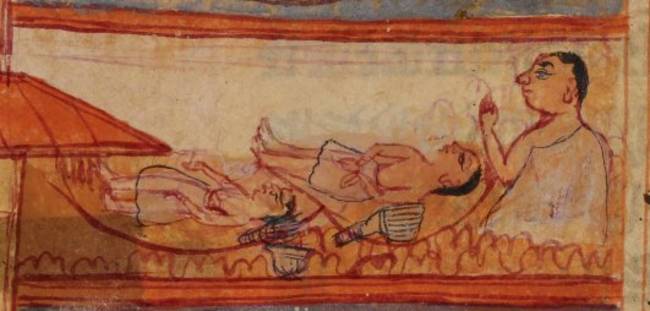
In some respects the Prakīrṇakas can be thought of as supplementary to the rest of the Śvetāmbara scriptures. Directed chiefly at monks and nuns, most of them expand on subjects mentioned in texts from the other classes of scripture. The most important example is the practice of fasting to death. In all, five Prakīrṇakas discuss this ritual. They tend to focus on the spiritual and mental aspects of this rite.
One Prakīrṇaka is particularly interesting in that it appears to share concerns and even passages and literary imagery with texts from non-Jain sources. Scholars dispute the age of the Ṛṣi-bhāṣitāni, with some claiming it as an early work while others hold it to be a later collection of writings.