Becoming a monk or nun

As acknowledged in the earliest sacred writings, all parts of the fourfold community have vital roles in the Jain faith. Lay men and women are crucial because they support monks and nuns by giving alms and, secondly, they have children, ensuring that the religion survives. Since the beginning of Jainism, however, becoming a monk or a nun and leading a mendicant lifestyle has been an ideal proposed to followers of the faith. Keeping to this type of life is not possible for all because of its strict rules and requirements so the proportion of mendicants to lay Jains is very small. Usually, monks and nuns remain mendicants for the rest of their lives, although rarely some return to the lay status.

For Jains the ideal condition for spiritual progress is to be completely detached from the world, which can be achieved more easily as a mendicant. The monastic code or monastic rule is the set of restrictions that governs the behaviour of monks and nuns. They vow to give up not just material possessions but also all passions or emotions that cause karma. This includes concern for the physical body, such as tasty food, concern for warmth and personal cleanliness. Thus the new mendicant gives up all elements of householder life, including emotional attachments to other people, places or things.

When a householder decides to become a monk or nun, after due preparation he or she completes the ritual of renunciation or initiation – dīkṣā. The two main Jain sects of Digambaras and Śvetāmbaras follow somewhat different dīkṣā ceremonies and treat the new mendicants slightly differently. In all sects, the initiation of new mendicants is celebrated by all of the fourfold community.

An initiate chooses a mendicant lineage or monastic order to join. These have distinct initiation traditions as well as slightly varying monastic lifestyles. There are usually rules regarding the age or caste of the initiate and the individual who may carry out the ceremony. Joint initiations often take place. Sometimes these see several family members or entire families ordained at once.

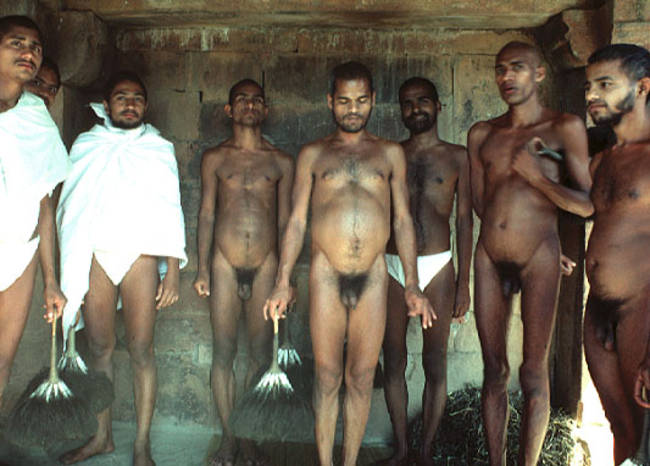
The initiation ceremony features the ritual of keśa-loca – ‘pulling out of the hair’ – which indicates indifference to the body. The new monks and nuns perform the Five Great Vows – mahā-vrata. They also receive equipment associated with the order into which they are being initiated. Since one of the mendicant vows specifies non-ownership and non-attachment, the ascetics are not believed to own these objects. Monastic equipment, such as the broom and mouth-cloth, are considered the minimum needed to live a religious life.
Diksha Ceremony in Jainism: An Analysis of Its Socio-Political Ramifications

Binod C. Agrawal

Stories from the Āvaśyaka Commentaries

Nalini Balbir

La question de l’ordination des enfants en milieu jaina

Nalini Balbir

Atonements in the Ancient Ritual of Jaina Monks

Colette Caillat

The Śvetāmbara Mūrtipūjak Jain Mendicant

John Cort

History of Jaina Monachism from Inscriptions and Literature

Shantaram Bhalchandra Deo

The Codes of Conduct of the Terāpanth Samaṇ Order

Peter Flügel

Escaping the World: Women Renouncers among Jains

Manisha Sethi

The Unknown Pilgrims: The voice of the sādhvīs – the history, spirituality, and life of the Jaina women ascetics

N. Shāntā

Guardians of the Transcendent: An Ethnography of a Jain Ascetic Community

Anne Vallely

Historical Dictionary of Jainism

Kristi L. Wiley

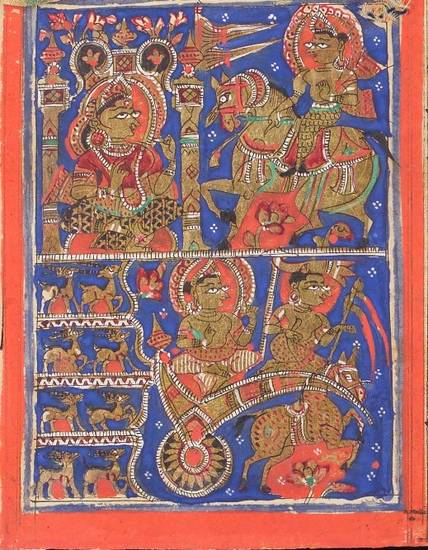
Nemi decides to renounce

This illustrated page from a 15th-century manuscript of the Kalpa-sūtra is provided by the National Gallery of Australia. At the beginning of the section dealing with the 22nd Jina, Ariṣṭanemi, also called Nemi, the painting shows the famous episode of Prince Nemi’s decision to renounce worldly life just before his wedding. He is so appalled by the distress of the animals due to be killed for his wedding feast that he decides to become a monk.

https://searchthecollection.nga.gov.au/object/147981?keyword=147981&includeParts


Procession to the renunciation ceremony

Dressed as a bride, the initiation candidate scatters money and gifts in a large public procession on her way to the renunciation ceremony to become a nun – dīkṣā. Nuns and lay women dressed in wedding saris walk behind her palanquin in this undated ceremony in Gujarat, found on YouTube.

http://www.youtube.com/watch?v=IMlgQfXJcL8

Digambara nuns pluck out their hair

In the keśa-loca rite, part of the renunciation ceremony of dīkṣā, new monks and nuns pull out their hair, which indicates indifference to worldly concerns, including pain. Ashes are smeared on the roots of the hair, making it easier to pluck out and reducing pain. In the Digambara sects, keśa-loca is a public ceremony. This rite took place among Digambara nuns, as shown by the peacock-feather broom – piñchī – one of them holds in this YouTube video. The dīkṣā was conferred by the nun Gaṇinī Āryikā Viśuddhamati mātājī in Kota, Rajasthan, a few years ago, though the precise date is unknown. The language used is Hindi, with Sanskrit and Prakrit for recitations from the scriptures.

http://www.youtube.com/watch?v=6W2ZA4S_srA&NR=1

Śvetāmbara initiation candidate prepares

A Śvetāmbara candidate for monkhood is prepared for the renunciation ceremony – dīkṣā. Note the tufts of hair left on his shaven head, ready for the keśa-loca ritual in which he pulls out his hair. This YouTube video in Hindi shows a ceremony that took place in Ujjain, Madhya Pradesh, on 27 November 2010.

http://www.youtube.com/watch?v=dfdIimH5syQ

Group initiation of Digambara monks – part 1

After studying with him for four years, 25 men are initiated into Digambara monkhood by the monk Vidyāsāgar. At the start of the public renunciation ceremony – dīkṣā – the candidates resemble grooms, wearing jewels and turbans, their eyes outlined in kohl. They are then seen after the rite of keśa-loca. Dressed in orange and saffron robes, lay Jains dance in celebration. Scenes from the life of a Digambara monk are also shown, such as the monk carrying his broom and water pot, making the gesture to signal that he seeks alms. A group of fully nude monks leads the ailaka novices in loincloths, followed by the junior novices wearing white robes. Digambara nuns, wearing the white robe and holding the broom made of peacock feathers, are also shown in this YouTube video. This collective ceremony in Hindi took place on 21 August 2004 in the so-called Dayoday Tirth, Delwara Ghat, in the town of Jabalpur in Madhya Pradesh on the bank of the river Narmada.

http://www.youtube.com/watch?v=txYBw9ke-aU

Group initiation of Digambara monks – part 2

As part of their group ceremony of renunciation – dīkṣā – novice monks have the last tufts of hair plucked out by their teacher Vidyāsāgar. Then they remove their clothes amid the rejoicing of the large crowd of lay Jains. As a sign of detachment from worldly affairs, public nudity is associated with advanced spirituality and is the mark of a fully-fledged monk in Digambara Jainism. Then Vidyāsāgar traces the auspicious symbols of svastikas and four dots on their heads in sandalwood paste. Found on YouTube, this collective ceremony in Hindi took place on 21 August 2004 in the so-called Dayoday Tirth, Delwara Ghat, in the town of Jabalpur in Madhya Pradesh on the bank of the river Narmada. Watch the next part of the ceremony at: http://www.youtube.com/watch?v=K0WeUJici30&NR=1

http://www.youtube.com/watch?v=zFfMGtC7zfI&NR=1

Group initiation of Digambara monks – part 3

Towards the end of their group ceremony of renunciation – dīkṣā – 25 new Digambara monks have their heads anointed with sandalwood paste. The monk Vidyāsāgar, who is initiating them, traces the auspicious symbols of swastikas and four dots on their heads and palms. Then he blesses the new monks and newly initated novices – kṣullaka – who are dressed in white. He also consecrates their water pots – kamaṇḍalu. Both groups of mendicants hold their characteristic peacock-feather brooms – piñchī. Found on YouTube, this collective ceremony in Hindi took place on 21 August 2004 in the so-called Dayoday Tirth, Delwara Ghat, in the town of Jabalpur in Madhya Pradesh on the bank of the river Narmada. Watch the final part at http://www.youtube.com/watch?v=6QCfjoyWbLk

http://www.youtube.com/watch?v=K0WeUJici30&NR=1

Group initiation of Digambara monks – part 4

At the end of their group ceremony of renunciation – dīkṣā – 25 new Digambara monks are blessed by their teacher Vidyāsāgar. He also consecrates their water pots –kamaṇḍalu – and blesses some newly initated novices – kṣullaka – who are dressed in white. Both groups of mendicants hold their characteristic peacock-feather brooms – piñchī. The new monks have ritually taken off their clothes, which is a sign of advanced spirituality in Digambara Jainism. Then Vidyāsāgar preaches to the assembly of lay Jains. White-clad nuns – āryikā – are at the front of the crowd. Found on YouTube, this collective ceremony in Hindi took place on 21 August 2004 in the so-called Dayoday Tirth, Delwara Ghat, in the town of Jabalpur in Madhya Pradesh on the bank of the river Narmada. Watch the first part of the ceremony at http://www.youtube.com/watch?v=txYBw9ke-aU

http://www.youtube.com/watch?v=6QCfjoyWbLk

Śvetāmbara initation candidates in the crowd

As part of the renunciation ceremony to become a monk or nun – dīkṣā – the initiation candidates pass through a joyful crowd, who throw sandalwood powder over them. The initiates have already shaven and plucked out their hair and wear the white monastic robe of Śvetāmbara mendicants. This undated ceremony on YouTube takes place in Gujarat.

http://www.youtube.com/watch?v=R7KAt5_6HUw

New monks and nuns receive their names

During a Śvetāmbara Terāpanthin renunciation ceremony – dīkṣā – Ācārya Mahāshraman, the present leader of this order, reads out the names of the new nuns and monks. Since mendicants are considered to be new persons, new monks and nuns are always given new names. Performed in Hindi, this ceremony found on YouTube takes place in Rajasthan in September 2010.

http://www.youtube.com/watch?v=AEg3SOSJ3AU

A Jina renounces

This highly decorated page from a 15th-century manuscript of the Kalpa-sūtra is provided by the National Gallery of Australia. A young man performs the rite of keśa-loca – ‘pulling out of the hair’ – which indicates indifference to the body. It is part of the initiation ceremony of dīkṣā, in which an initiate renounces the world and becomes a mendicant. He is watched by Śakra, king of the gods who takes an active role in the lives of the 24 Jinas.

https://searchthecollection.nga.gov.au/object/177852?keyword=177852&includeParts

Introduction to Jainism – part 3

This extract from a BBC documentary on Jainism called The Frontiers of Peace explores the concept of renunciation. The video follows a young woman’s decision to become a nun and a rich lay man’s faith. The ritual of keśa-loca is filmed, in which monks and nuns pull out their hair. The lay man is shown making the auspicious symbols of the svastika, three dots representing the ‘three jewels’ of right insight, right knowledge and right conduct and the horizontal crescent of the siddha-śilā, where liberated souls live. This 2010 YouTube video is the third of four parts. See the next part at: http://www.youtube.com/watch?v=670KFhISeUk

http://www.youtube.com/watch?v=a96nz4DvRRE

Introduction to Jainism – part 4

This extract from a BBC documentary called The Frontiers of Peace explores the mendicant element of the traditional fourfold community. A man talks about his decision to stop being a Jain monk and return to the householder life, while a young woman fulfils her wish to becomes a nun. This 2010 YouTube video is the last of four parts. See the first part at: http://www.youtube.com/watch?v=IPscKFV5yKU

http://www.youtube.com/watch?v=670KFhISeUk&NR=1

Five Great Monastic Vows

Pravin K. Shah writes about the Five Great Vows taken by Jain monks and nuns. The information is provided by the Jainism Literature Center, associated with the Faculty of Arts and Sciences at Harvard University.

http://www.fas.harvard.edu/~pluralsm/affiliates/jainism/jainedu/5greatvows.htm

Lorem ipsum dolor sit amet, consectetur adipiscing elit. Ut elit tellus, luctus nec ullamcorper mattis, pulvinar dapibus leo.

Contents