The ‘Perfect Ascetic’

The general term for Jain monks and nuns is ‘ascetic’ or ‘mendicant’. They are people who have completed the official initiation ceremony called dīkṣā and live according to monastic rules. These include general rules of mendicant life and specific rules according to the mendicant’s sect and monastic order. The ‘perfect ascetic’ is a monk or nun who observes all the rules and does not behave in any way like a lay person.

The life of a mendicant is hard, both physically and mentally, and the rules regulating monastic life are intended to help them fulfil the ‘five great vows’ – mahā-vratas – and to gain complete detachment. There are rules for each area of daily life. They are listed in various groups, which overlap to some extent. Meant to be memorised, these lists are strings of key words, each representing detailed content.

One of the main Śvetāmbara works on this concept is the Uttarādhyayana-sūtra, a scripture of the Śvetāmbara sect. It deals with ‘the true monk’ in the 15th chapter and with the ‘bad ascetic’ in the 17th. The other chapters also set out what monastic life should be. For example, chapter 26 gives the components of ‘correct behaviour’ – sāmācārī – while chapter 31 describes the ‘mode of conduct’ – caraṇavidhi – by listing elements of behaviour. The lists are arranged in order of length, starting with the smallest number. Chapter 35 again takes up the subject of the ideal mendicant, discussing what the ‘houseless monk’ should do.

Monks and nuns have renounced the householder life to make spiritual progress. Underlying a large part of the monastic lifestyle is the principle of detachment, which mendicants try to act out in their lives. They should be constantly aware of their physical and mental actions, so they can exercise full self-control. Renunciation means rejecting or, at least, controlling all attachments to the world, including physical needs and emotions. Being completely detached is necessary to achieving the total calmness or equanimity needed to get rid of old karma and avoid attracting new karma. Only individuals who have no karma can reach final liberation from the cycle of birth. The ‘perfect ascetic’ advances a long way towards this goal.

History of Jaina Monachism from Inscriptions and Literature

Shantaram Bhalchandra Deo

The Jains

Paul Dundas

Historical Dictionary of Jainism

Kristi L. Wiley

A Śvetāmbara nun descends from Shatrunjaya

A nun from a Śvetāmbara Mūrtipūjaka mendicant order runs barefoot down the steps leading down from Mount Shatrunjaya. This temple-city in Gujarat is one of the most significant Śvetāmbara Mūrtipūjaka pilgrimage sites. The steep path from the foot to the summit, where the principal shrines are found, has around 4000 steps.

http://www.flickr.com/photos/30120194@N02/5070779493/

Digambara nuns pluck out their hair

In the keśa-loca rite, part of the renunciation ceremony of dīkṣā, new monks and nuns pull out their hair, which indicates indifference to worldly concerns, including pain. Ashes are smeared on the roots of the hair, making it easier to pluck out and reducing pain. In the Digambara sects, keśa-loca is a public ceremony. This rite took place among Digambara nuns, as shown by the peacock-feather broom – piñchī – one of them holds in this YouTube video. The dīkṣā was conferred by the nun Gaṇinī Āryikā Viśuddhamati mātājī in Kota, Rajasthan, a few years ago, though the precise date is unknown. The language used is Hindi, with Sanskrit and Prakrit for recitations from the scriptures.

http://www.youtube.com/watch?v=6W2ZA4S_srA&NR=1

Five Great Monastic Vows

Pravin K. Shah writes about the Five Great Vows taken by Jain monks and nuns. The information is provided by the Jainism Literature Center, associated with the Faculty of Arts and Sciences at Harvard University.

http://www.fas.harvard.edu/~pluralsm/affiliates/jainism/jainedu/5greatvows.htm

Introduction to Jainism – part 1

This extract from a BBC documentary called The Frontiers of Peace introduces the ancient Indian religion of Jainism. A Śvetāmbara monk explains some of the main principles of Jainism, especially non-violence. The programme mentions the influence of Jains in India and on the work of Mahātma Gandhi. This 2010 YouTube video is the first of four parts. See the next part at: http://www.youtube.com/watch?v=UHMQRmRKh_U

http://www.youtube.com/watch?v=IPscKFV5yKU

Introduction to Jainism – part 2

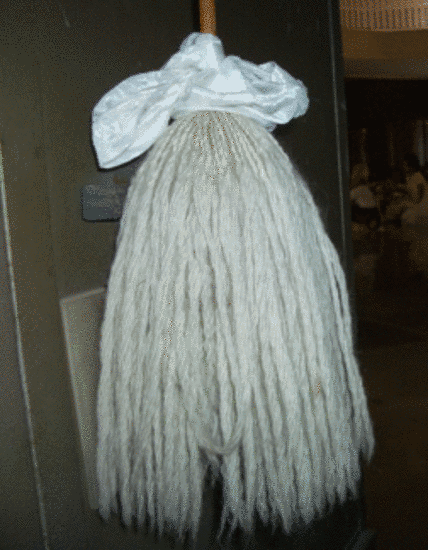
This extract from a BBC documentary called The Frontiers of Peace explores the relationship between Jain traditions and modernity. A Jain lay man tells how he reconciles his faith with his industrial business interests. A Śvetāmbara monk explains the significance of his monastic broom – known as a rajoharaṇa or oghā – including the eight auspicious symbols wrapped around the handle. A nun leads lay followers in the rite of confession – pratikramaṇa. A young woman creates auspicious symbols in rice as an offering as she talks about her decision to become a nun. This 2010 YouTube video is the second of four parts. See the next part at: www.youtube.com/watch

http://www.youtube.com/watch?v=UHMQRmRKh_U

Introduction to Jainism – part 3

This extract from a BBC documentary on Jainism called The Frontiers of Peace explores the concept of renunciation. The video follows a young woman’s decision to become a nun and a rich lay man’s faith. The ritual of keśa-loca is filmed, in which monks and nuns pull out their hair. The lay man is shown making the auspicious symbols of the svastika, three dots representing the ‘three jewels’ of right insight, right knowledge and right conduct and the horizontal crescent of the siddha-śilā, where liberated souls live. This 2010 YouTube video is the third of four parts. See the next part at: http://www.youtube.com/watch?v=670KFhISeUk

http://www.youtube.com/watch?v=a96nz4DvRRE

Introduction to Jainism – part 4

This extract from a BBC documentary called The Frontiers of Peace explores the mendicant element of the traditional fourfold community. A man talks about his decision to stop being a Jain monk and return to the householder life, while a young woman fulfils her wish to becomes a nun. This 2010 YouTube video is the last of four parts. See the first part at: http://www.youtube.com/watch?v=IPscKFV5yKU

http://www.youtube.com/watch?v=670KFhISeUk&NR=1

Jain mantras

This 2007 animation from YouTube features a Digambara monk singing the fundamental Jain sacred formulas. The second is the Namaskāra-mantra, also called the Navkār-mantra or Namokār-mantra. A very old mantra in Prakrit, it can be sung to various melodies. It is chanted daily to the ‘five types of beings worthy of worship’ or Supreme Beings’:

  • enlightened teachers – Arhats or Jinas
  • liberated souls – siddhas
  • mendicant leaders – ācāryas
  • teachers – upādhyāyas
  • mendicants – sādhus.

Then comes a short mantra about the emptiness of the world of rebirths and the celebration of the ‘four auspicious things’ or ‘four refuges’: 

  • Arhat
  • siddha
  • monks
  • law – dharma.

www.youtube.com/watch?v=Y-b17i_iTiA

Lorem ipsum dolor sit amet, consectetur adipiscing elit. Ut elit tellus, luctus nec ullamcorper mattis, pulvinar dapibus leo.

Contents