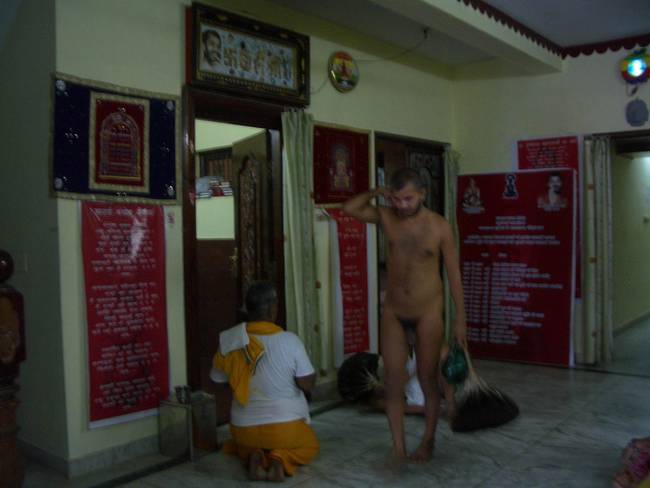
Lay people offering food or alms to mendicants is a basic aspect of the broader concept of giving – dāna – in Jain belief and the most valuable in practice. Since the Jain monks and nuns do not possess anything and have never been allowed to cook for themselves, they survive on the daily alms the Jain laity give them.
One of the common words for alms is Sanskrit bhikṣā, used in modern Indian languages as well. Another familiar word used in this context, especially in modern times, is gocarī, which literally means ‘going like a cow’. This describes the monk going for food from place to place like a cow, which eats mouthfuls of grass at different places in a field. From the point of view of the donor, offering food to mendicants is technically known as ‘the vow of sharing with a guest’ – atithi-saṃvibhāga-vrata – or ‘the gift of food’ – āhāra-dāna.
Food can be seen as central to Jain belief and identity, and the values and practices relating to food are spread through stories and scriptures. The offering and accepting of food has rules for both the lay donors and the ascetics who receive it that date back to the earliest texts and oral traditions. Mendicants may also choose to take on extra vows to enhance their spiritual progress. The giving and accepting of food alms is highly ritualised for both sides of the relationship, which are part of the fourfold community of Jains. However, there are significant differences between the rituals of the Śvetāmbara and Digambara sects, as there are in the mendicant lifestyles of each of these major sects.