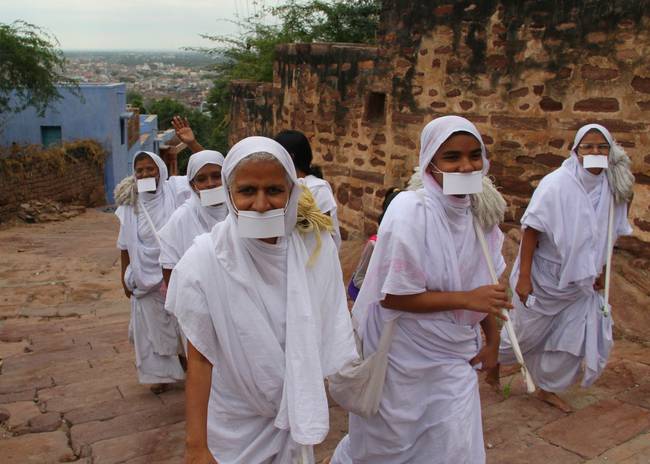
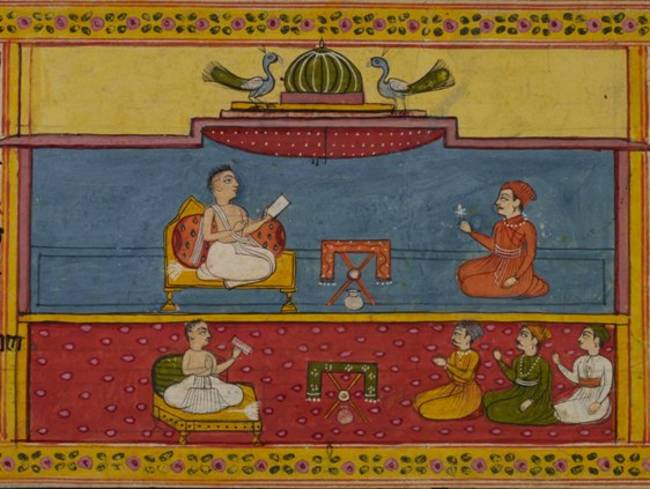
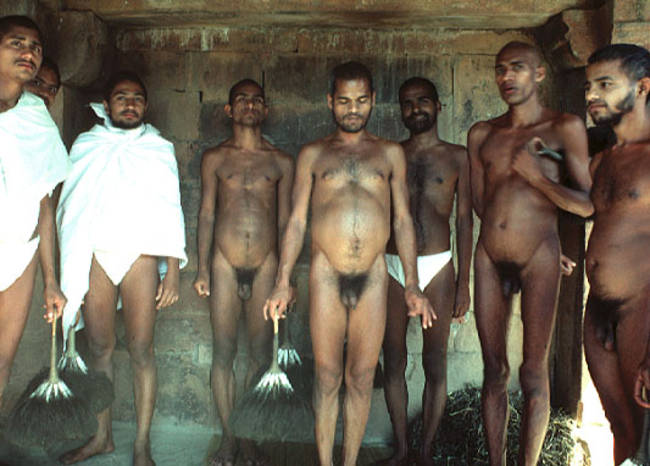
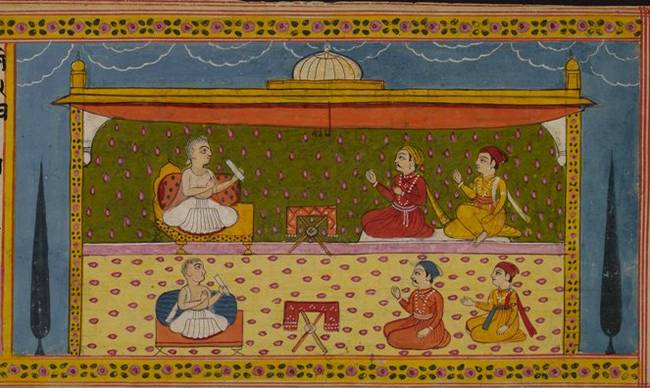
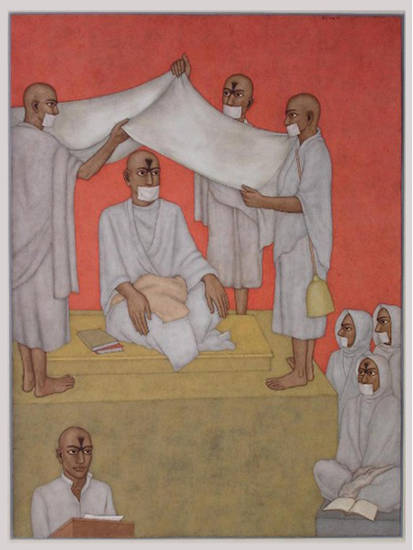
The term ‘mendicant’ refers to monks and nuns in general. Jain mendicants are people who have become monks or nuns after the official initiation ceremony called dīkṣā. They renounce ordinary life, receive the monastic equipment in accordance with the monastic order to which they will belong.

After that they lead a life conforming to the ‘five great vows’ – mahā-vrata. These vows provide a frame of behaviour for mendicants, but there are many specific rules for each and every aspect of daily life.

The Śvetāmbara Mūrtipūjak Jain Mendicant

John Cort

The Codes of Conduct of the Terāpanth Samaṇ Order

Peter Flügel

Guardians of the Transcendent: An Ethnography of a Jain Ascetic Community

Anne Vallely

Riches and Renunciation: Religion, Economy and Society among the Jains

James Laidlaw

Escaping the World: Women Renouncers among Jains

Manisha Sethi

Mahāvīr Jayantī procession – part one

The festival of Mahāvīr Jayantī is often marked with a procession in which images of the 24th Jina Mahāvīra are carried through the streets. This large procession is made up of animals, singers and musicians, dancers and local Jains celebrating the birth of the last Jina. This procession took place in March 2010 in Jaipur, Rajasthan and also featured the message of environmental conservation.

Captured in two parts on YouTube, this is the first part. You can also watch the second part.

http://www.youtube.com/watch?v=bb4Zcw8Qj1k

Two Śvetāmbara Terāpanthin samaṇī nuns

This YouTube video dating from 2009 shows two Śvetāmbara Terāpanthin samaṇīs tallking about their religious background and beliefs. They hold folded cloths in front of their mouths while they speak. Normally Śvetāmbara Terāpanthin monks and nuns wear a mouthcloth – muṃhpatti – permanently over their mouths, hanging from strings over the ears. Samaṇīs have important roles in teaching the Jain diaspora.

http://www.youtube.com/watch?v=UWQDmhVE9to

Hymn to Naminātha

This 2007 hymn on YouTube is a Sanskrit stotra to the 21st Jina, Naminātha or Lord Nami. The sound is accompanied by pictures of statues of Jinas and monks of various Jain sects. The plain statues of nude Jinas with closed eyes and the naked monks belong to Digambara sects. The white-robed mendicants are Śvetāmbara Mūrtipūjakas. The monks and nuns with mouth-cloths attached to their ears are from either the Terāpanthin or Sthānaka-vāsīn Śvetāmbara sects.

http://www.youtube.com/watch?v=9ITs9VuKiEU

Śruta-pañcamī – part 2

The procession of holy texts in the annual Digambara festival of knowledge – Śruta-pañcamī – is the main subject of this YouTube video. As the centre of festivities, the sacred books are decorated with flower garlands. They are placed on a model elephant, protected from the sun by a canopy and fanned with fly-whisks, all symbols of royalty. The Jain flag is waved in front. Lay Jains, many dressed in orange – the colour of spirituality in India – take part in the noisy procession. Some carry the metal sculptures of the 12 dreams of a Jina’s birth. A nude monk, holding his peacock-feather broom, and white-clad nuns also participate. The procession ends with a display of holy books, the reflection of which is ritually anointed, and a rite of worship in which the auspicious symbol of the svastika can be clearly seen.

This three-part YouTube video records the festival at Mudalur, Tamil Nadu in India, held over 28th and 29th May 2009. This is the second part and you can watch the last part at: http://www.youtube.com/watch?v=zR21K-vcp5U

http://www.youtube.com/watch?v=M-I9AYjIcAc

Nineteenth-century Jains at prayer

Attributed to LaPlante, an engraving entitled ‘Religious Service of the Jains, Bombay’, published in the Illustrated London News in 1875. A monk is shown sitting in the lotus position with a bookstand to his right. The lay Jains sit on the floor to hear his sermon.

From the collection of Professor Frances W. Pritchett of Columbia University in New York.

http://www.columbia.edu/itc/mealac/pritchett/00routesdata/1000_1099/jaintemples/jainlife/iln1875max.jpg

Five Great Monastic Vows

Pravin K. Shah writes about the Five Great Vows taken by Jain monks and nuns. The information is provided by the Jainism Literature Center, associated with the Faculty of Arts and Sciences at Harvard University.

http://www.fas.harvard.edu/~pluralsm/affiliates/jainism/jainedu/5greatvows.htm

Procession of Mahāvīra idol

This 2009 YouTube video shows the procession of a small golden idol of Mahāvīra – rathayātrā – through the streets of New Delhi. The procession takes place during the Digambara festival of Daśa-lakṣaṇa-parvan. The men in orange, some of whom are also crowned, are the prominent lay men who have won the privilege of accompanying the statue in the procession. They put the statue in an ornate shrine on a platform set on a tractor with false horses attached. Before the procession begins, Jain lay women move trays of fire in circles – āratī – offering pūja or worship to the idol. Lay people dance in the procession around the idol, which is fanned by fly-whisks, a sign of high status. Many of the dancers wave bright plastic objects, which are modern equivalents of traditional fly-whisks. The women dressed in orange are the wives of the prominent lay men on the tractor. A model of Bāhubali with vines creeping up his legs is also fanned. Small children ride on the shrine, which is hung with a Jain flag at the back, while musicians and models form part of the procession. Two fully fledged monks take part, accompanied by novice monks in white. At the end of the procession the idol is taken into the temple, placed in front of a large Jina image and given a sacred bath. Food is provided for the participants afterwards. All along, there are various songs or prayers. In the first part, the Pañca-namaskāra-mantra is sung to various tunes, then come hymns in Hindi. For instance, one of them says: ‘Listen to the voice of the Jinas’. 

http://www.youtube.com/watch?v=-W2bH_hfbLU

Poṣa-daśamī – part 1

The Poṣa-daśamī festival celebrates the birth of the 23rd Jina, Pārśvanātha or Lord Pārśva. Held in late December or early January in the Western calendar, Poṣa-daśamī is also known as Pārśvanātha-jayantī. Typically of many Jain festivals, an idol from a local temple is the centre of a procession through the streets – ratha-yātrā. The procession includes decorated animals, musicians, lay Jains and white-clad nuns. The Jina image is hung with bright flower garlands and is fanned with fly-whisks, symbolic of royalty. Lay Jains dance, sing and clap as the statue is brought into the temple at the end of the procession.

This two-part YouTube video records the 2010 Poṣa-daśamī festival in Jaipur, Rajasthan as celebrated by Śvetāmbara Jains. This is the first part .

http://www.youtube.com/watch?v=YihWayx7NKQ

Watch the second part here
https://www.youtube.com/watch?v=UddsDpAwYAY

Terāpanthin monks and nuns

This YouTube video shows Śvetāmbara Terāpanthin monks and nuns walking down a street in New Delhi in July 2009. Clad in white and wearing the mouth cloth – muṃhpatti – they walk barefoot, carrying their monastic equipment in bags and bundles. They are accompanied by lay Jains, many of the women dressed in orange, which is a holy colour in India. Among the monks is Ācārya Mahāprajña, the tenth ācārya or leader of the sect, who died in May 2010.

http://www.youtube.com/watch?v=UzZ_SHDSrAI

Jain mantras

This 2007 animation from YouTube features a Digambara monk singing the fundamental Jain sacred formulas. The second is the Namaskāra-mantra, also called the Navkār-mantra or Namokār-mantra. A very old mantra in Prakrit, it can be sung to various melodies. It is chanted daily to the ‘five types of beings worthy of worship’ or Supreme Beings’:

  • enlightened teachers – Arhats or Jinas
  • liberated souls – siddhas
  • mendicant leaders – ācāryas
  • teachers – upādhyāyas
  • mendicants – sādhus.

Then comes a short mantra about the emptiness of the world of rebirths and the celebration of the ‘four auspicious things’ or ‘four refuges’: 

  • Arhat
  • siddha
  • monks
  • law – dharma.

www.youtube.com/watch?v=Y-b17i_iTiA

Digambara monk takes alms from lay women

This video on YouTube shows a Digambara monk eating alms offered by lay women. The women gather round and put spoonfuls of food into his cupped hands. He moves his thumbs quickly through it to ensure it is pure enough to eat.

http://www.youtube.com/watch?v=eUl-pjZF_TU

Āryikā Jñānamati – Jain Triple World Research Institute

One of the most influential women in contemporary Jainism, Āryikā Jñānamati is a Digambara nun. Her achievements and character inspired the 1974 foundation of the Digambar Jain Trilok Shodh Sansthan – Jain Triple World Research Institute – in Hastinapur, Uttar Pradesh. Here described by her name in modern Hindi, Āryikā Jñānamati is profiled on the institute’s website.

http://www.jambudweep.org/our-inspirators/gyanmati-mataji

Introduction to Jainism – part 1

This extract from a BBC documentary called The Frontiers of Peace introduces the ancient Indian religion of Jainism. A Śvetāmbara monk explains some of the main principles of Jainism, especially non-violence. The programme mentions the influence of Jains in India and on the work of Mahātma Gandhi. This 2010 YouTube video is the first of four parts. See the next part at: http://www.youtube.com/watch?v=UHMQRmRKh_U

http://www.youtube.com/watch?v=IPscKFV5yKU

Introduction to Jainism – part 2

This extract from a BBC documentary called The Frontiers of Peace explores the relationship between Jain traditions and modernity. A Jain lay man tells how he reconciles his faith with his industrial business interests. A Śvetāmbara monk explains the significance of his monastic broom – known as a rajoharaṇa or oghā – including the eight auspicious symbols wrapped around the handle. A nun leads lay followers in the rite of confession – pratikramaṇa. A young woman creates auspicious symbols in rice as an offering as she talks about her decision to become a nun. This 2010 YouTube video is the second of four parts. See the next part at: www.youtube.com/watch

http://www.youtube.com/watch?v=UHMQRmRKh_U

Introduction to Jainism – part 3

This extract from a BBC documentary on Jainism called The Frontiers of Peace explores the concept of renunciation. The video follows a young woman’s decision to become a nun and a rich lay man’s faith. The ritual of keśa-loca is filmed, in which monks and nuns pull out their hair. The lay man is shown making the auspicious symbols of the svastika, three dots representing the ‘three jewels’ of right insight, right knowledge and right conduct and the horizontal crescent of the siddha-śilā, where liberated souls live. This 2010 YouTube video is the third of four parts. See the next part at: http://www.youtube.com/watch?v=670KFhISeUk

http://www.youtube.com/watch?v=a96nz4DvRRE

Introduction to Jainism – part 4

This extract from a BBC documentary called The Frontiers of Peace explores the mendicant element of the traditional fourfold community. A man talks about his decision to stop being a Jain monk and return to the householder life, while a young woman fulfils her wish to becomes a nun. This 2010 YouTube video is the last of four parts. See the first part at: http://www.youtube.com/watch?v=IPscKFV5yKU

http://www.youtube.com/watch?v=670KFhISeUk&NR=1

Lorem ipsum dolor sit amet, consectetur adipiscing elit. Ut elit tellus, luctus nec ullamcorper mattis, pulvinar dapibus leo.

Contents