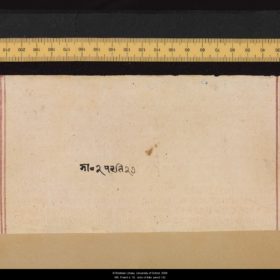
The Mahā-niśītha-sūtra is one of the Cheda-sūtras, a class of scriptures in the Śvetāmbara canon. It is written in Ardhamāgadhī Prakrit, though it is clearly influenced by the later variety of Prakrit known as Jaina Māhārāṣṭrī. It is a book with a disputed place in the canon. The Śvetāmbara Mūrti-pūjaks recognise its authority and include it among their 45 canonical scriptures. The sect of the Sthānaka-vāsins, however, excludes it because they believe it is later and not authoritative.
The Mahā-niśītha-sūtra’s eight sections mainly deal with confession, contrition and atonement, monastic hierarchy and definitions of the perfect ascetic and the imperfect monk. These topics are found in other Cheda-sūtras. The title Mahā-niśītha-sūtra echoes the Niśītha-sūtra, which belongs to the same category, and suggests that this is a full version of it, because its title means ‘great niśītha-sūtra’. But its style is quite different. Instead of the expected concise aphoristic style, it alternates discursive parts in prose and long verse portions. On the other hand, several chapters are narrative in character. These qualities may explain why the Mahā-niśītha-sūtra has aroused suspicions of its credibility, both among Sthānaka-vāsin Jains and modern scholarship.
Text of the colophon:
on the last line of the previous page: […] saṃvat 1834 śāke 1699 pravarttamāne māgasara māse śukla-pakṣe
1. dvitiyā titha[u] somavāre laṣitaṃ // paṃcacatvāriṃśad-āgama-tapodyāpana-nimittaṃ likhitam idaṃ sūtraṃ śrī-
2. Sūratibaṃdira-vāstavya-śrāvikā-samudāyair likhāpitaṃ paṃ śrīUttamavijaya-gaṇi-upadeśāt //
3. śreyo stu śramaṇa-saṃghasya ā-candrārkkaṃ ciraṃ naṃdatād idaṃ pustakaṃ śrīTapāgacchīya śrī śrīVijayadeva-
4. -sūri-bhāṃḍāre muktaṃ //cha:// cha:// cha:// cha://
Text of the colophon:
1. Copied in the year 1834 of the Vikrama era, in the current year 1699 of the Śāka era, in the month of Mārgaśīrṣa, in the bright fortnight, on the second day, a Monday. This sacred scripture was copied in order to conclude the fast called ’45 Āgamas’.
2. This copy was commissioned by a group of lay women resident at Surat, at the instigation of the monk Uttamavijaya-gaṇi.
3. May there be prosperity to the mendicant community as long as [the] sun and moon will last. May this manuscript rejoice for a long time.
4. It was deposited in the library collection of Vijayadeva-sūri of the Tapā-gaccha. // cha// cha// cha// cha//
This colophon is fairly complete and contains:
With regard to the fast marked by the manuscript, Jain women , in particular, make several specific vows or undertake fasts on various religious occasions. From the 17th century onwards special fasts and ceremonies have developed around the worship of the 45 canonical scriptures which Śvetāmbara Mūrti-pūjaks recognise as authoritative. These are a way of publicly asserting their sectarian identity against the Sthānaka-vāsins, who recognise 32 such scriptures. It is significant that the Mahā-niśītha-sūtra is the text copied here, since the Sthānaka- vāsin sect disputes its status.