Category:Jnātadharma-kathā (Prakrit d. 4)

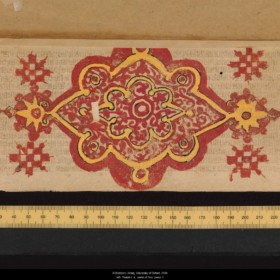
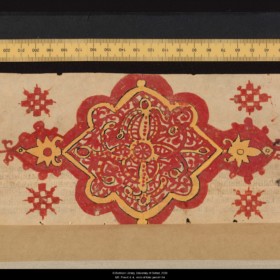
First page – decorations


Description

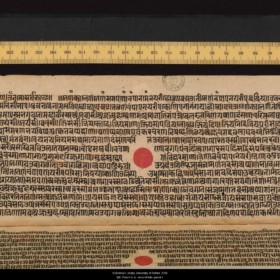
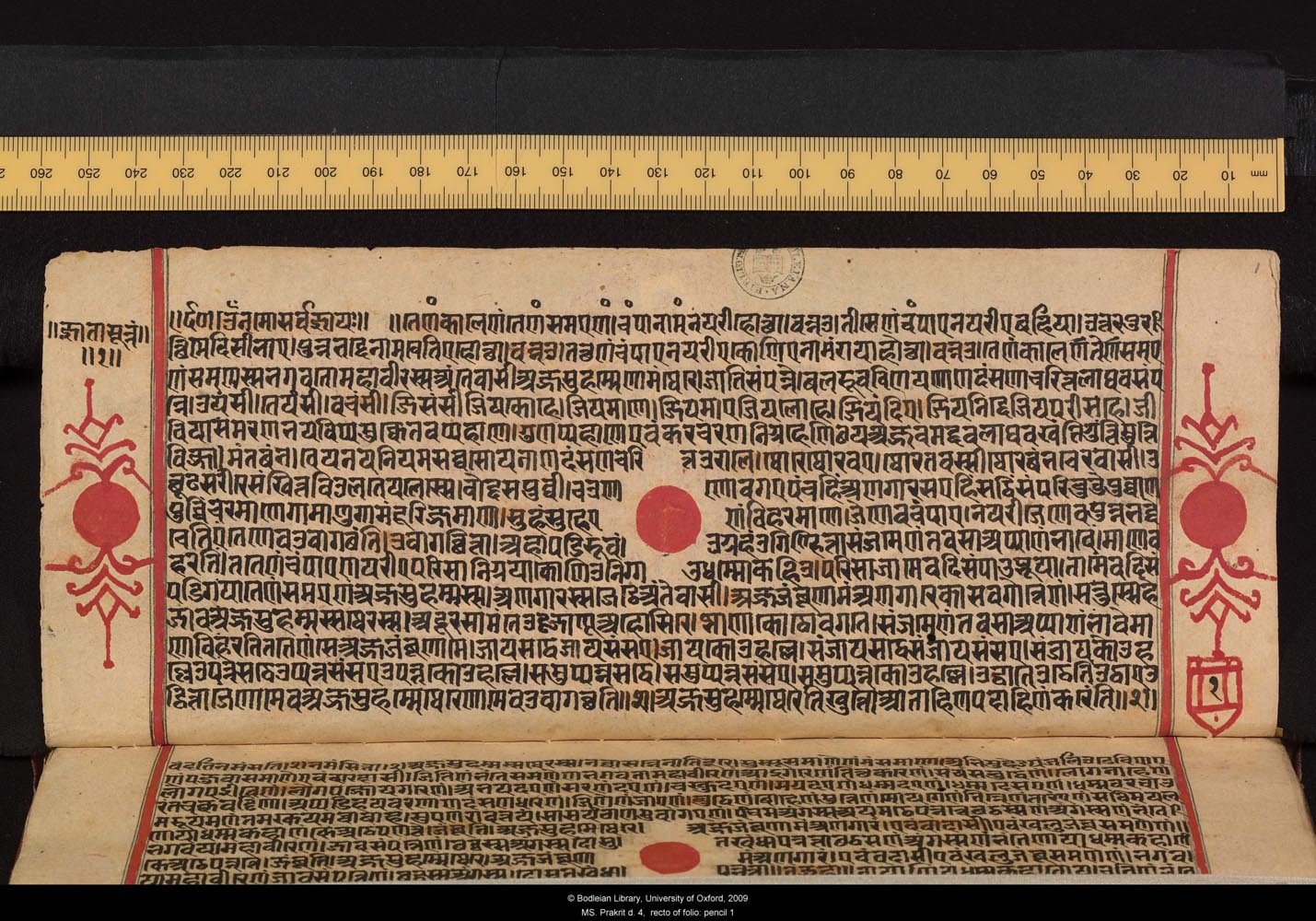
This page shows the beginning of the text and is an instance of the typical beginning of a Jain manuscript. From the top:

  • it starts with the auspicious sign, sometimes called bhale
  • it continues with a phrase of homage to the Jinas: oṃ namo sarvajñāya[ḥ] – ‘Homage to the Omniscient‘.
  • then the text proper starts with the typical opening sentence of Śvetāmbara canonical texts: teṇaṃ kāleṇaṃ teṇaṃ samaeṇaṃ – ‘at that time, at that epoch’.

Other visual elements are:

  • the marginal title, Jñātā-sūtraṃ
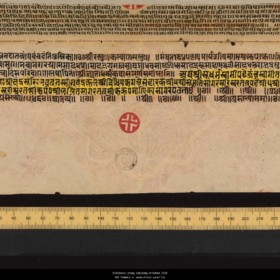
  • the folio number, appearing firstly at the bottom of the right-hand margin, which is its regular place, and again in the left-hand margin
  • in the right-hand margin, the folio number is emphasised by surrounding red ornamentation
  • the three red circles along the central horizontal plane
  • the floral motifs around the circles.

The three red circles are symbolic reminders of the way in which manuscripts were bound when they were on palm leaf. Here the central one is in a lozenge blank shape. Strings through one or more holes were used to thread together the loose folios so the reader could turn them over easily. The circles are in the places where the holes would once have been.


Background

The Jñāta-dharma-kathā is part of the Śvetāmbara canon. It is the sixth Aṅga, which is the first type of scripture in the canon. Like all the texts belonging to the Śvetāmbara canon, its language is the variety of Prakrit known as Ardhamāgadhī. The Prakrit version of the title of the work is Nāyā-dhamma-kahāo. The title as given in the left margin of the first folio is Jñāta-sūtram. The word sūtra is often used as an equivalent of ‘sacred scripture’.

This work is narrative in character and composed of two main sections. The first one has 19 chapters, which contain different stories or parables. The second one has ten chapters, which are all repetitions of an initial story, but multiplied and modified, with changes in the names of persons and places.

The first section has rich narrative material and includes some stories which have become very famous in the Jain tradition. For instance, chapter eight is the first instance in the Śvetāmbara canon of a biography of Princess Mallī, who is destined to become the 19th Jina. Chapter 16 includes an early version of the story of Princess Draupadī, who wed the five Pāṇḍava brothers. It thus provides one of the first instances of a Śvetāmbara Jain version of the Mahābhārata epic. On the other hand, with the parable of the five rice grains entrusted to a man who must increase them, chapter seven has an Indian instance of a parable also known from the Bible.

Manuscripts show that the texts of the Śvetāmbara scriptures were copied without any interruption of the tradition through the centuries. This one is dated 1645 of the Vikrama era, or 1589 CE. Its interesting colophon mentions individuals who were involved in the commissioning and use of the manuscript, making it a noteworthy object.

Related Articles

What is a Jain manuscript?

Eight auspicious symbols

How to read a Jain manuscript

Sacred writings

Śvetāmbara canon

Story Aṅgas

Jain Mahābhāratas

Malli

Śvetāmbara

Pigments in Jain manuscript art

Cycle of rebirth

Related Manuscripts

Blank first page of the Kalpa-sūtra

Opening page