Category:Jasahara-cariu (Beta 1471)

Yaśogha’s initiation as a monk

Description

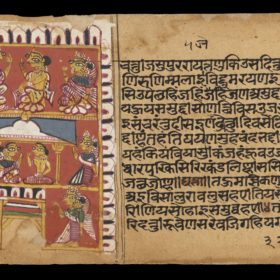
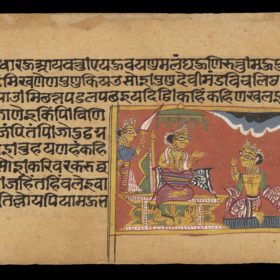
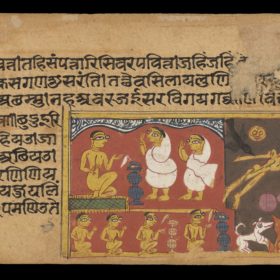
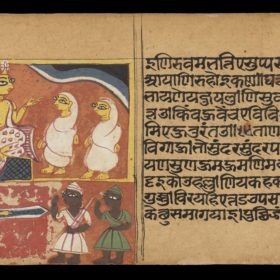
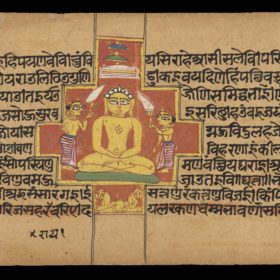
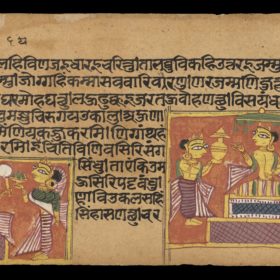
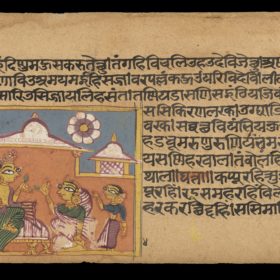
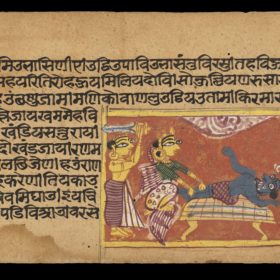
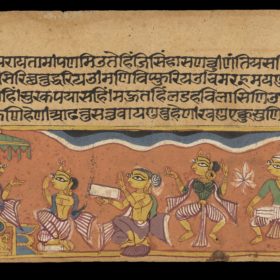
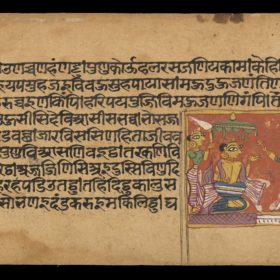
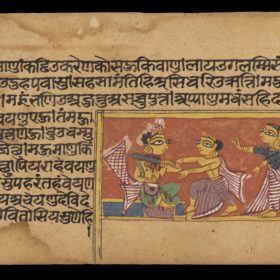
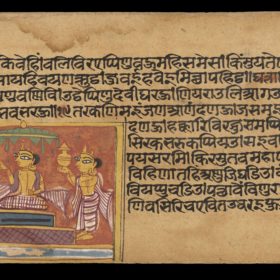
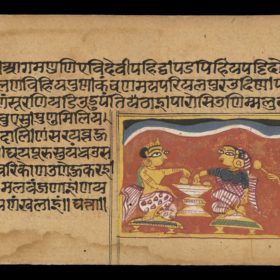
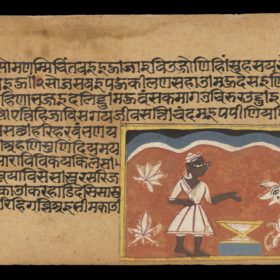
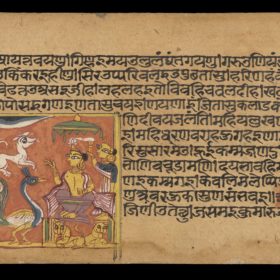
The caption in the left-hand margin states: Jasogha dīkṣā – ‘Jasogha’s initiation‘.

Two sitting figures face each other. The one on the left is naked while the other is clothed and raises his hand to his head. The scene is set in a natural landscape, represented by a tree on each side.

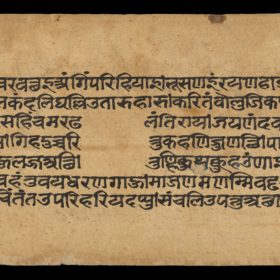
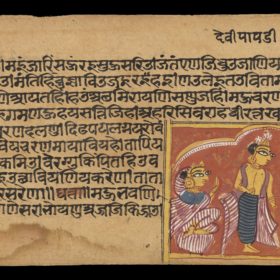
On the left side is a Digambara monk. He is totally naked because he is a full monk, not a novice. In this version of the story, his name is Varadatta, as mentioned in line 3 of the facing text: Varadattamuṇiṃdahu pāsi – ‘near the monk Varadatta’. In front of him is the former King Yaśogha, who has shed his ornaments and does not wear an upper garment. He is performing the ritual gesture of dīkṣā that symbolises religious initiation as a monk, namely plucking out his hair.

The long protruding eye is a typical feature of western Indian painting. Its origin is unclear.

Other visual elements

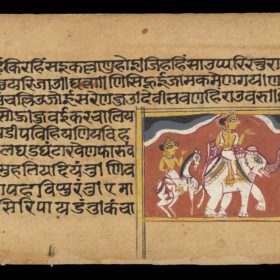
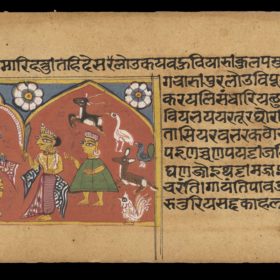
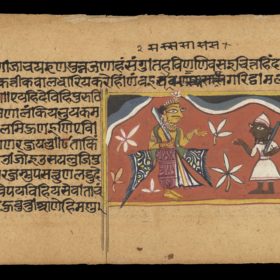
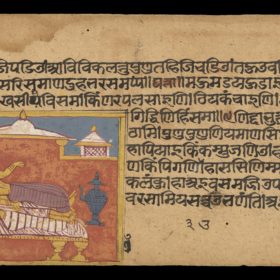
This is a good example of an average manuscript. A red background is used for the painting but there is no use of gold, intricate design elements or elaborate script.

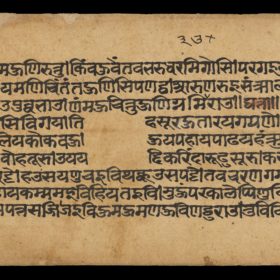
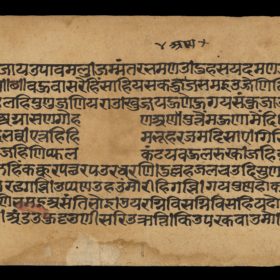
The bottom of the right margin contains the number 4, which is the folio number.

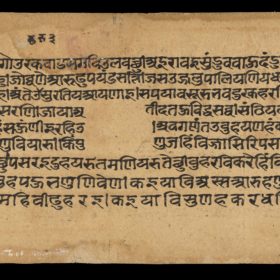
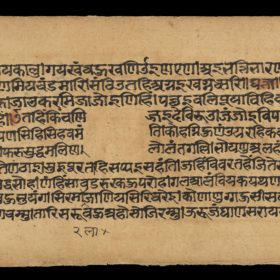
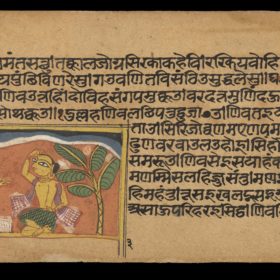
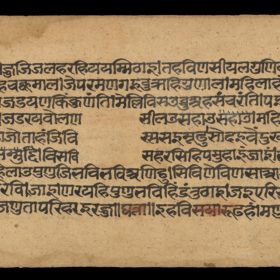
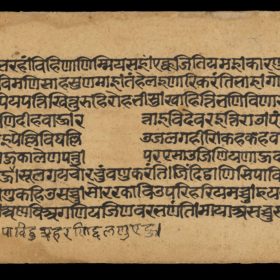
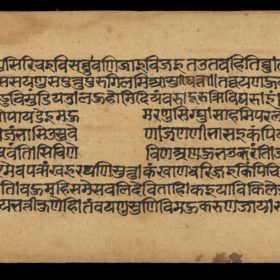
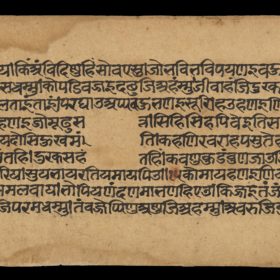
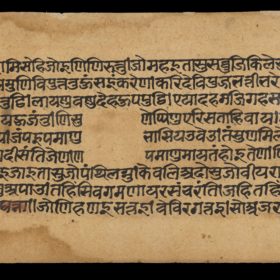
In the upper and lower margins there are syllables missing from the main text, or corrections. The number before them is the line number where they should be inserted.

Script

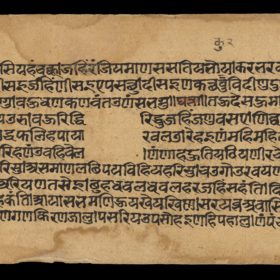
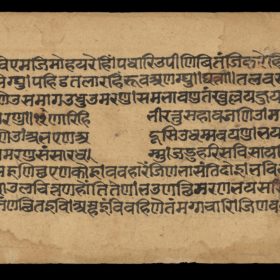
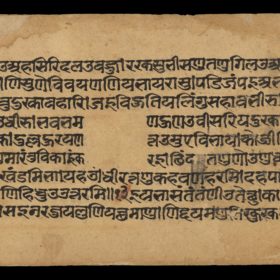
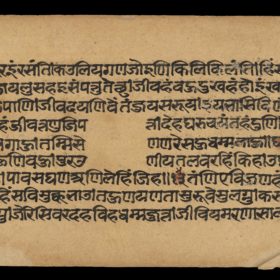
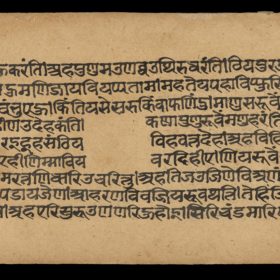
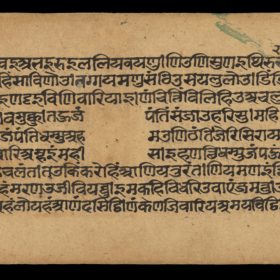
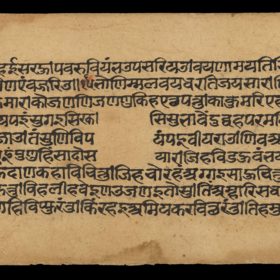
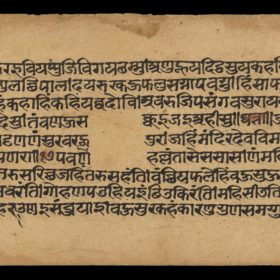
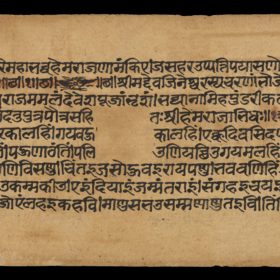
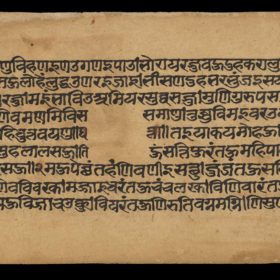
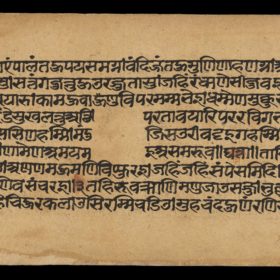
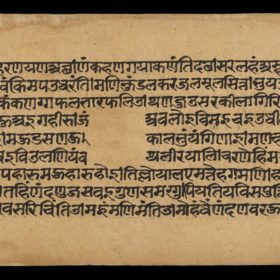
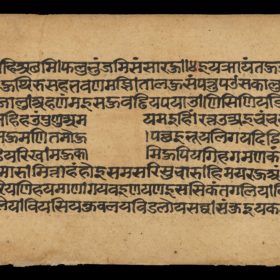
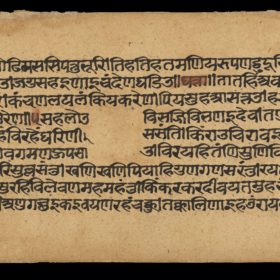
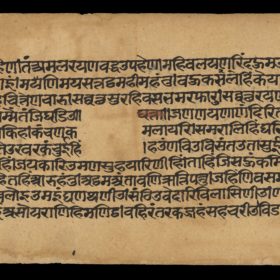
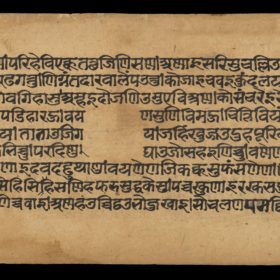
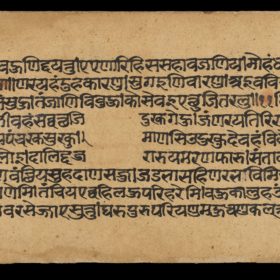
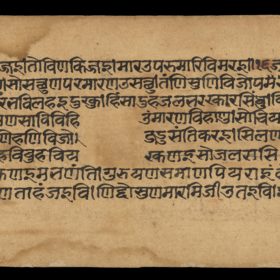
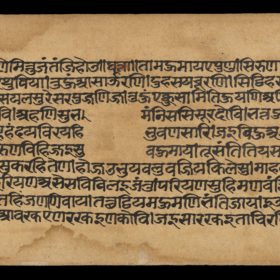
The script used for the main text is the Jaina Devanāgarī script. It is used for writing numerous Indian languages, here Apabhraṃśa Prakrit.

Background

The 15th-century Digambara poet Raidhū composed a version of one of the most important Jain tales – the Story of Yaśodhara. Called the Jasahara-cariu, which means ‘the story of Yaśodhara’ in Apabhraṃśa Prakrit, Raidhū’s version has the subtitle of ‘having the characteristic of compassion’ – daya-lakkhaṇa. This underlines the main teaching of the story, which is a manifesto against violence of all types and a defence of non-violence.

A story with several episodes, the tale of Yaśodhara is a good representative of religious teaching in narrative form – dharma-kathā. Its importance comes from the fact that it shows very clearly the working of karma and rebirth and refers to key concepts, such as:

  • violence – hiṃsā – both factual and intentional
  • desire or greediness.

Ultimately, all the protagonists become pious Jains and will be emancipated.

The text is divided into four sections called sandhi, which go into detail about all the rebirths that are recounted in the story within a story:

Sections of the Jasahara-cariu

Section

Events

1

  • King Māridatta and the search for proper sacrificial victims
  • Birth of Yaśodhara

2

  • Yaśodhara’s youth and death
  • His son Yaśomati ascends to the throne

3

  • Parallel rebirths of Yaśodhara and Candramati

4

  • Last rebirth as Abhayaruci and Abhayamati
  • Final conversions

This version of the story has not yet been published. It is known from very few manuscripts, which are all illustrated and in India. However, not a single manuscript is complete. So this one, held in the Wellcome Trust in London, is a precious document, even though it is only the first half of the story. It is probable that the second half of the document is a manuscript originally kept in Delhi, dated 1454 CE. It is also very likely that a single folio in the Los Angeles County Museum of Art is part of the same manuscript (see Balbir, forthcoming).

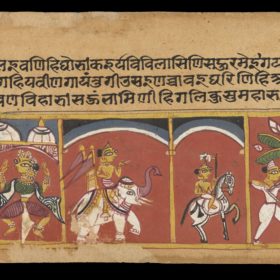
Like other versions of the tale of Yaśodhara, Raidhū’s narrative poem is a major inspiration for illustrations in Digambara manuscripts.

Related Articles

How to read a Jain manuscript

Cycle of rebirth

Non-violence

The ‘Three Worlds’

What is a Jain manuscript?

Jain Beliefs

Jain universe

Story of Yaśodhara

Karma

Becoming a monk or nun

Jina

Related Manuscripts

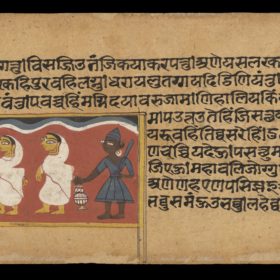
The cemetery and seeking alms

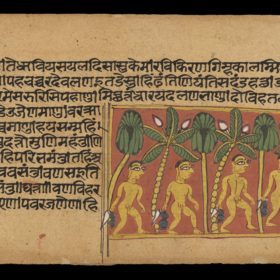
Digambara Jain monks walking