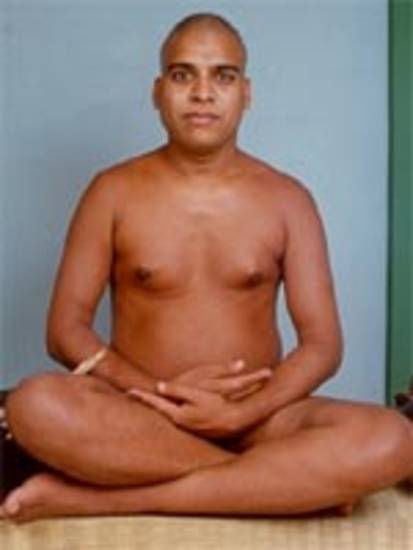
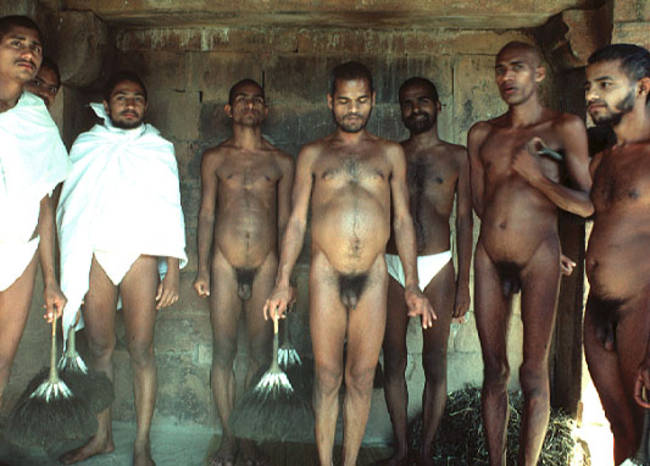
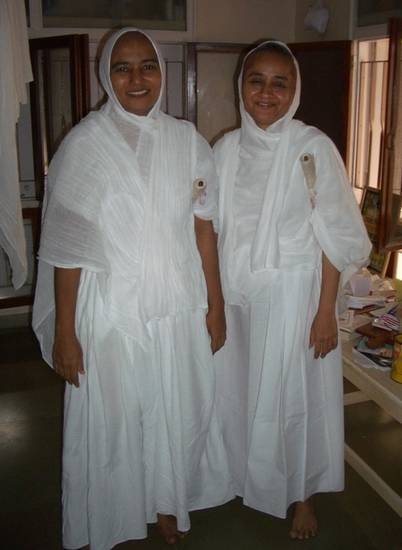
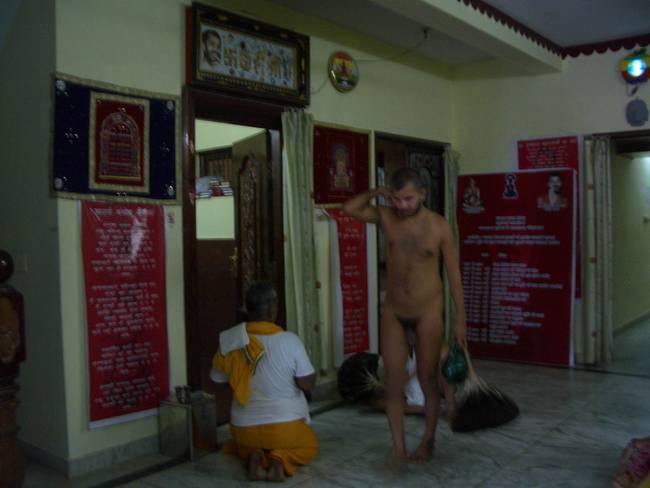
Even though the two major Jain sects take their names from their respective mendicant clothing practices, lay people of all Jain sects wear clothes. The issue of nudity or clothing is discussed only for mendicants. Monastic clothing has become the most obvious way to differentiate male mendicants of the Śvetāmbara and Digambara sects, which form the two main Jain sectarian traditions. The former means ‘white-clad’ in Sanskrit while the latter means ‘sky-clad’ – that is, naked. It is not as superficial a topic as it may appear, because wearing or not wearing clothes symbolises attachment or non-attachment to the world respectively.
Both male and female mendicants take a vow of non-possession when they become monks and nuns. As the ideal to which mendicants aspire, the ‘perfect ascetic’ demonstrates total detachment from the things of the world. This includes not just objects but emotions of all kinds, since complete detachment enables spiritual progression towards omniscience and liberation from the cycle of births. Disagreements over the interpretation of the vow of non-possession – aparigraha – support the different practices of the sects when it comes to whether their mendicants wear clothing and, if so, what kinds of clothing are permitted.
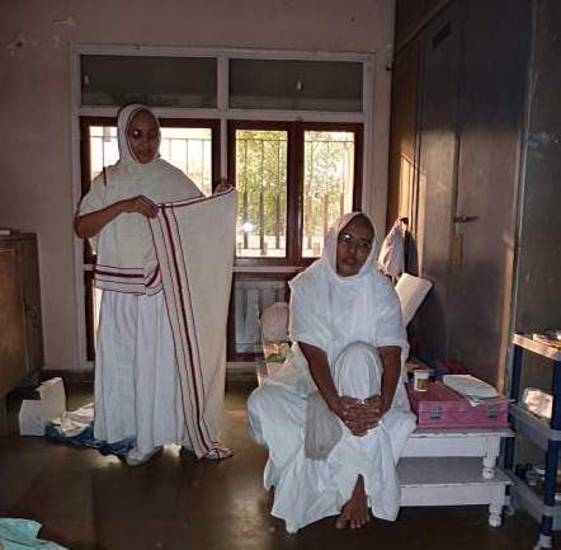
The sectarian attitudes towards mendicant clothing can be seen most clearly in the issue of female nudity. Female mendicants of all sects wear white robes. However, Digambara nuns are not considered to be the female equivalent of monks because they are not permitted to be nude. Since, for Digambaras, mendicants must renounce clothing to achieve salvation, nuns are not considered capable of the level of spirituality required for liberation. In contrast, Śvetāmbaras believe that nuns are just as capable of gaining emancipation as monks, even though both wear clothes. For them, detachment involves having no feelings of attachment to monastic equipment, not in using the items themselves. Both sects consider certain items vital to living a religious life.
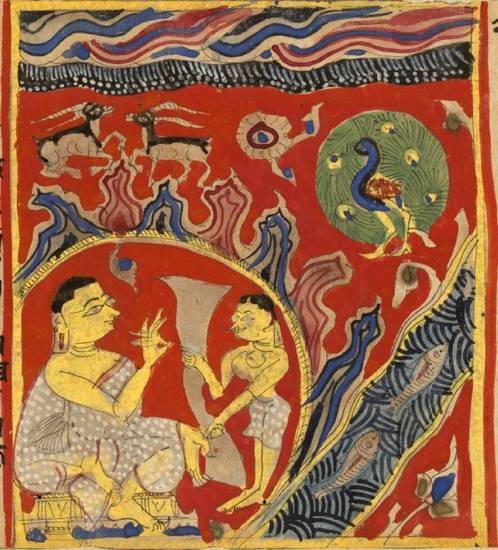
Examples of both clothed and nude figures can be found in Jain art. Early depictions of Jinas show them naked but loincloths appear around the fifth century. Since then idols created by the Digambara and Śvetāmbara sects have usually demonstrated representative attitudes towards mendicant nudity. This results in Śvetāmbara images wearing loincloths while Digambara images are naked.
To non-Jains, being nude in public for any reason can be disturbing, shocking or even wrong from a religious point of view. This has led to periods when rulers of India discouraged or banned public nudity. The official disapproval of nudity in the 19th century weakened as Digambara monks revived the custom in the early 20th century. Though there is a national law against nudity in public, the principle of religious nudity is legally accepted. However, attitudes towards public nudity today vary and Digambara monks may try to adapt to the traditions of the local population.