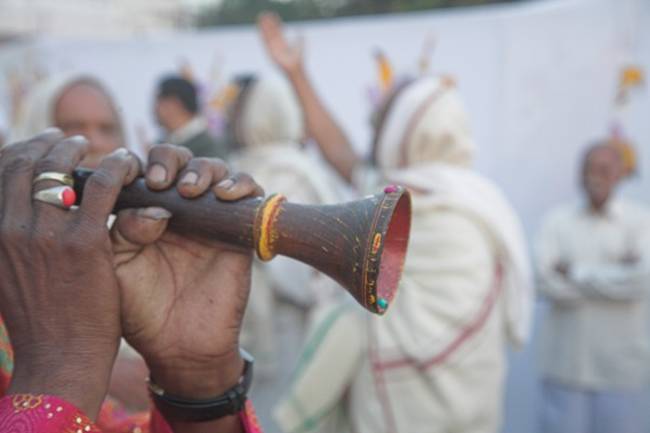
Development of Jain hymns
Both main Jain sects agree that Jain hymns have a mythological beginning, stemming from when the king of the gods first praised the qualities of the Jinas. They believe that the daily hymn Sakra Stavan is based on this exaltation, which lists many images that help to form basic concepts of the Jina. Although Jains have drawn on elements of the Hindu tradition of bhakti poetry in developing religious songs, they have adapted it to their philosophical ideas and practices. Jain hymns stress praise of the Jinas and extol their virtues.Origin of Jain hymns
According to both Śvetāmbara and Digambara mythological traditions, hymns in Jain worship derive from praise given to the Jinas by Śakra, the king of the gods. This has become the Śakra Stavan, recited as part of the daily morning prayers. Memorised by all observant Jains, the text provides a list of images for Jain devotional literature while also giving it a mythological pedigree. Many of the epithets for Jinas in hymns come from this and other texts recited as part of the morning worship. They are memorised by many Jains more often than any other long text so these images create the basis of understanding what a Jina is and what a Jina can do.Influence of Hindu bhakti
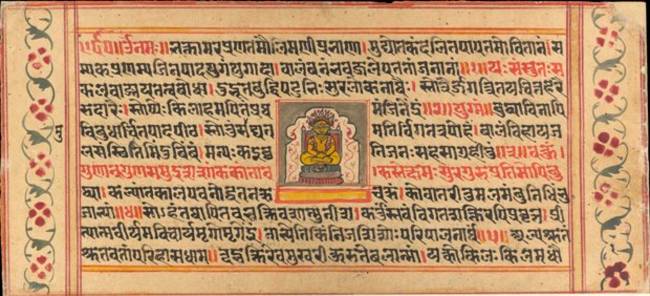
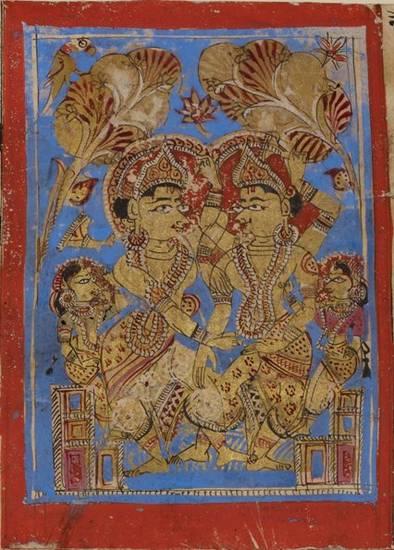 Nemi and Kr̥ṣṇa
Image by British Library © CC0 1.0 (Creative Commons Public Domain)
Jains have participated fully in the bhakti devotional movement but they have done so in ways that support their religious beliefs. Jain writers have composed thousands of devotional hymns, the most popular of which are performed daily.
Jain hymns draw on bhakti poetry aesthetics in language, metaphor and poetic metre and form discussed below in turn. However, these hymns differ from the standard trope of Hindu bhakti poetry, which focuses on passionate attachment to a god and cajoling of the divinity for favours. Instead, Jains emphasise the cultivation of spiritual progress and praise of the Jinas’ virtues.
Jain involvement in the bhakti tradition parallels the developments in bhakti literature more broadly. Jains have used the same poetic forms and devices as their Hindu counterparts. In addition, Jain bhakti poetry often shares metaphors with Hindu bhakti verse. For example, hymns addressed to the Jina Neminātha or Lord Nemi share with hymns addressed to the Hindu god Kṛṣṇa the focus on romantic love and the suffering of separation.
Hymns that are still commonly performed to this day include those by the great Digambara writers:
- Daulatrām (1789–1866)
- Dyānatrāy (1676–1726)
- Budhjan (circa 1763–circa 1838)
- Bhādardās (circa 1700–circa 1765).
- Ānandaghan (1603–1673)
- Udayratna (circa 1692–circa 1743)
- Jñānvimal-sūri (1645–1713).
Hymns
In general, the Sanskrit word stavan refers to ‘hymn’. Sometimes called bhajan or pada, Jain hymns are devotional songs usually sung in Gujarāti, Hindi, Mārvāḍī, and Braj Bhāṣā. There are several other words that have been translated as ‘hymns’ within the Jain tradition but nowadays these terms usually describe recitations.Contemporary Jains use stavan when they mean religious song. Jains customarily include several types of songs – gīt – in collections of hymns:- fasting songs – tapasya gīt
- mendicant welcome songs – sādhu svāgatam gīt or gahuli gīt
- ordination songs – dīkṣā gīt
- auction songs – boli gīt
- veil songs – cunḍaḍī gīt.
Other kinds of ‘hymns’
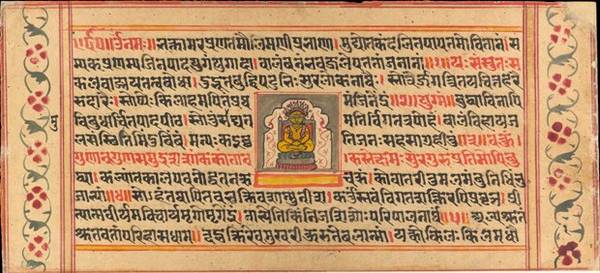 Bhaktāmara-stotra opening
Image by British Library © CC0 1.0 (Creative Commons Public Domain)
Several other words have often been translated as ‘hymns’ and, confusingly, each of these terms has been used differently among Jains. Though sometimes used instead of stavan, these other genres now refer chiefly to recitations rather than sung hymns.
Sajjhāys are narrative devotional poems recited or sung as part of the rite of confession or as a form of devotional study.
A stotra is a prayer to be recited, not sung. There are certain stotra that are widely read and recited, most notably the Bhaktāmara-stotra.
A stuti is an old prayer usually in Prakrit or Apabhraṁśa, which can be chanted or recited.
A sutra or verse is usually a ‘fixed’ text, which the reciter cannot change. Examples include the Kalpa-sūtra and the Khamāsamāṇo-sūtra, which are often recited from memory.
Languages and poetics
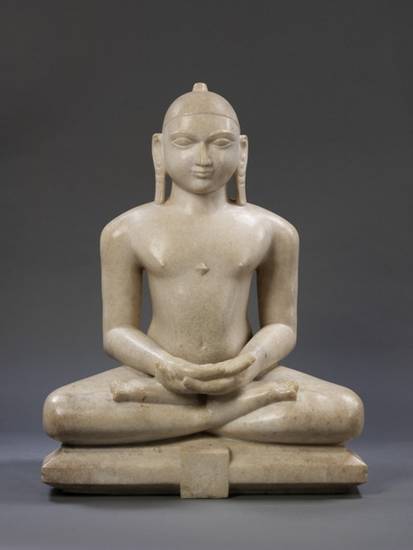 Digambara sculpture of Candraprabha
Image by Gift of Sir Michael Sadler K.C.S.I., C.B. © Victoria and Albert Museum, London
Jain hymns are written in every language that Jains have used. The bulk of medieval and modern hymns performed today are written in Gujarāti and Hindi, including dialects of Hindi such as Mārvāḍī. There are also substantial numbers of hymns written in Marathi and Kannada. The older hymn genres include hymns written in Prakrit, Sanskrit and Tamil.
Jain hymns are heavily influenced by Sanskritic conventions of verse. Their poetics draw on two major traditions within Sanskrit poetics – rasa and alaṅkār. Rasa poetics is a theory of mood focusing on a poem’s creation of mood. The most significant one in Jain religious songs is the rasa of peace or calmness. The alaṅkār, or ornament, devices include both metaphors and the music of the poetry.
Jain religious songs most frequently follow the pada verse form. Although this form is associated with the bhakti devotional movement in Hinduism, Jain writers adopted pada for their own religion.
Inherited as part of pada poetry, the moraic metre is generally used in Jain hymns. This musical metre counts the lines of the song in one of two methods. Either the heavy and light beats can be counted, or the stressed and unstressed beats in the rhythm of the language.
Evocation of mood – rasa
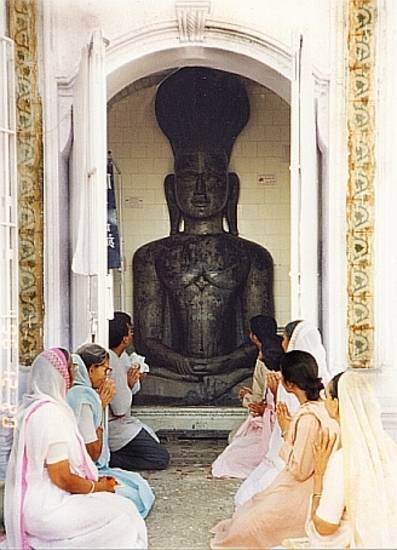 Lay people worship a Jina
Image by Sheetal Shah © Sheetal Shah
Writers of Jain hymns try to conjure up a feeling to heighten the devotional sentiments of their work. A hymn’s rasa – creation of mood – usually aims to arouse certain emotions in the subject of the song. However, Jain hymns do not hope to evoke any feelings in the Jinas who are their subject. Jinas are detached from earthly concerns and thus do not feel moods. Clearly, therefore, the poetry of Jain devotional songs is intended to create sentiments in the singers and listeners.
There are eight rasas outlined in Bharata’s Nāṭyaśāstra:
- love – śṛṅgāra
- humour – hāsya
- pity or compassion – kāruṇa
- anger – raudra
- heroism – vīra
- terror – bhayānaka
- disgust – bībhatsa
- wonder – adbhuta.
Lyrical ornaments – alaṅkār
Jain hymns use traditional Sanskritic methods of ornament – alaṅkār – to help produce attractive, meaningful lyrics. These techniques use both the:- meaning of words – for example, simile and metaphor
- the sounds of words, such as rhyme, alliteration and repetition. These latter aid the musicality of the words and the hymn in general.
- initial consonants or vowels are repeated
- different words with the same root are brought into play.
Form – pada verse
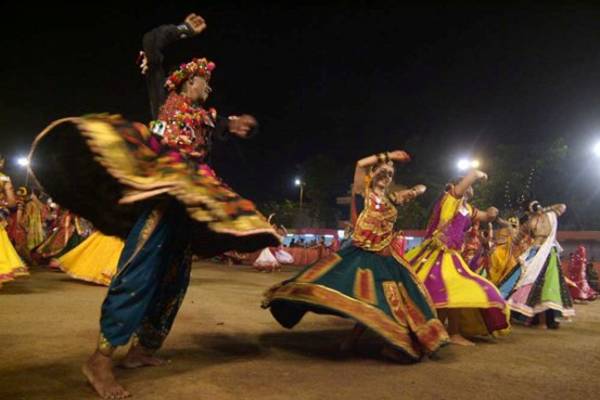 Rās-garbā dance
Image by Hardik jadeja © CC BY 3.0
Jain hymns are part of the bhakti devotional poetry movement of India and share its central formal aspects. Jains use the pada form for most of their hymns.
The pada usually have four to seven rhyming couplets and use the first or second line of the whole poem as a refrain throughout. Following Jayadeva and the South Indian bhakti poetry style which influenced Jayadeva, padas usually have the poet’s name in the last line. However, many of the newer religious songs do not include the poet’s name at the end.
Garbā poetry, which accompanies garbā dance at Navrātrī, is also in pada form.
The popular hymns performed in Digambara temples called Darśan Paths are also in the pada form. This shows how both major Jain sects have adopted this popular religious poetic form.
Metre – moraic metre
The metre of Jain hymns is that used in the conventions of the verse form of pada. Poetry in Prakrit did not measure cadence by pure syllables, but by moraic metre based on the weight of the syllables. Traditional moraic metre was adopted by writers of the pada form. Since this poetic form is the most common form of Jain hymns, most Jain religious songs use moraic metre. Rather than having a set number of syllables in the line, in moraic metre the metre is determined in one of two manners. One method is to count the number of long or heavy beats. The second way is to count the heavy beats as two and the light beats as one to add up to a number of total beats that is repeated in each line of the hymn. Musical metre is also determined by the stressed and unstressed beats. However, these stresses depend on the placement of the note within the rhythm, not the type of syllable in the lyrics. When the longer and stressed notes of the music are well matched by the heavy beats of the poetry, it results in smooth natural singing. Even so, this match of metres is not the primary factor when selecting a hymn repertoire. However, some women performers may consider this aspect when choosing their favourite solo hymn.Musicality
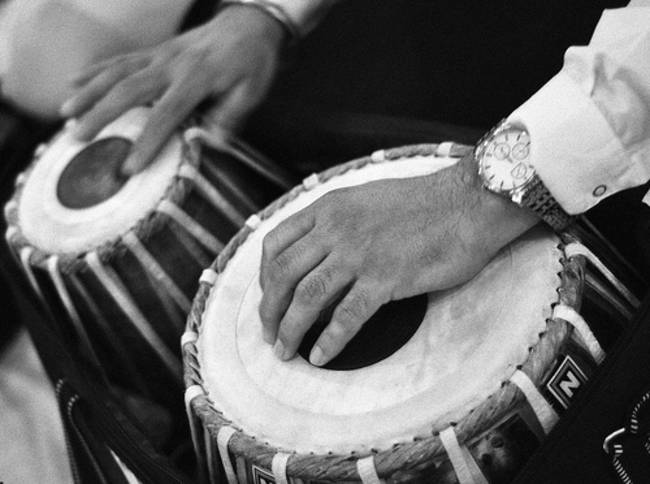
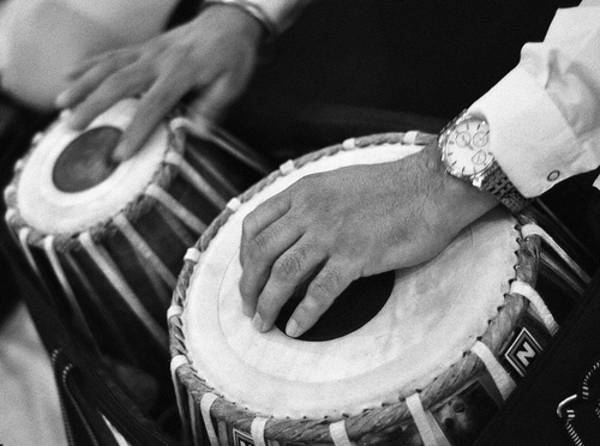 Playing the tabla
Image by eeshawn © CC BY-NC-ND 2.0
The instrumentation and melodies used for Jain hymns reflect both their roots as a western Indian music tradition and the context in which they are performed.
The musical instruments used to perform Jain hymns vary according to the singers. Although soloists sing without musical accompaniment, choirs generally play several percussion instruments. The sex of the singers also influences the choice of musical instruments and the type of performance. Female choirs tend to use simpler, more traditional instruments, including finger-snapping, to lead religious ceremonies. Male singing groups are more likely to play a variety of instruments, including modern ones, in more complex arrangements in front of audiences.
Jain hymns are musically part of the folk genres found in devotional music and wedding songs, though there are occasional links to the more formal rāga practice. The melodies are based on folk music traditional in western India although contemporary Bollywood influences may also be detected. Some traditional pieces of music are thought of as specifically Jain melodies and remain popular as aids to meditation. The style of singing Jain devotional songs also draws heavily on the folk music of Gujarāt and Rajasthan.
Instruments and musical arrangements
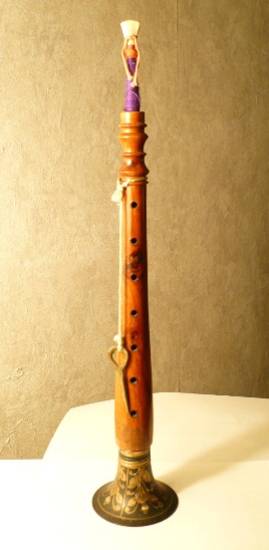 A śenāī
Image by Badagnani © CC BY 3.0
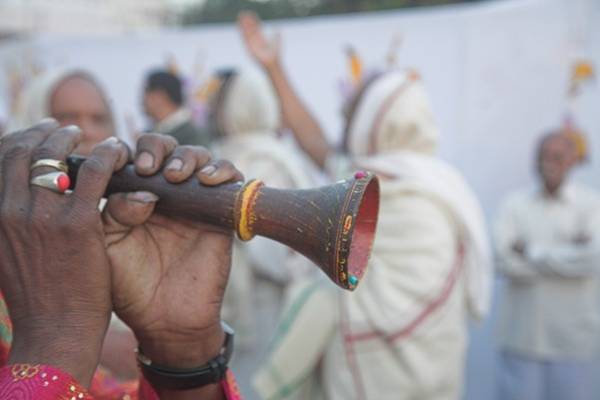
The instrumentation of the hymns differs in solo and group performances. A solo singer in a temple always sings unaccompanied, whereas group singing is accompanied by a variety of percussive instruments. Hymn recordings include instrumentation like that of popular Gujarātī folk music. This is characterised by voice and percussion with ‘touches’ of harmonium or the double-reed wind instrument, the śenāī. Singers in recordings of devotional songs are usually soloists.
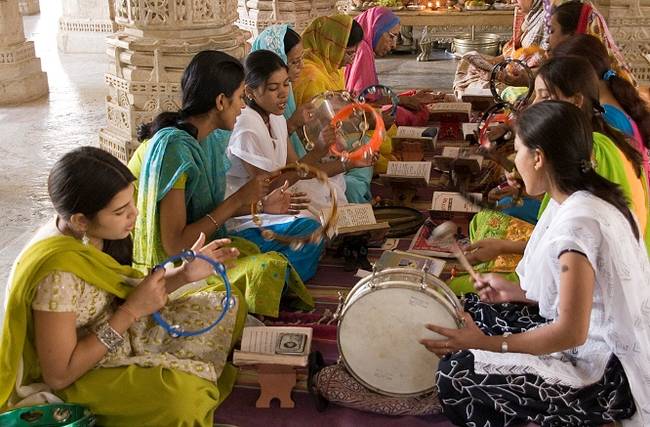
Women’s choirs often have one woman playing a steady beat on a double-headed drum, usually a dholak, while the others sing. The singers mark more complex rhythms with sticks, finger-snapping and clapping, hand cymbals or tambourines. They do not use any melodic instruments or drones. Women’s singing groups mostly perform liturgical worship rites, which serve chiefly as a form of offering in temple ceremonies.
Men’s singing groups sometimes add a melodic instrument, usually the harmonium or electric organ. They may use tabla rather than a double-headed barrel drum, and mainly use hand cymbals as their hand percussion. Men’s groups do not perform the seated percussion dance that women’s singing groups do. In general, men’s choirs are geared towards audience-focused performances. This difference in focus is illustrated by more elaborate instrumentation employing a harmonium, several drummers at once and a synthesiser. They also frequently use amplification and feature instrumental solos designed to show off virtuosity.
Melody and musical sources
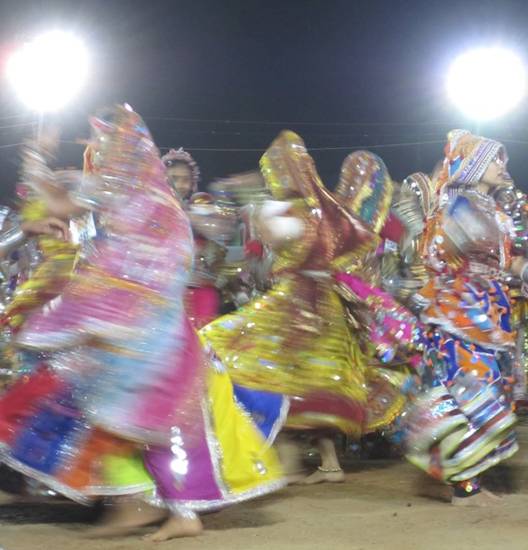 Women perform the rās-garbā
Image by calliopejen © CC BY-SA 3.0
The melodies of Jain hymns draw primarily on the folk music of western India. This includes wedding songs, devotional music from gazals to garbā and popular Bollywood film music.
While the formal worship liturgies name rāgas for the different sections, published hymns were never listed with rāgas. Rather than giving rāgas for the hymns, their melodies were given the names of earlier hymns or folk songs in hymn books. Playing several instruments and employing specific classical rāgas needs training in classical Indian music. The majority of Jain singing, however, is based on folk music with which most Jains are familiar.
The musicality of the hymns developed largely from the group-singing customs of Gujarāti rās-garbā and Rājasthāni folk-music styles. Most of the time the hymns are given tarj, or melody, designations from Gujarāti folk music or Bollywood film music. Hymns, as well as sections of the formal worship formulas, are often performed to popular rās-garbā melodies. Since the singers often know many of the melodies by heart, it is relatively easy to sing new words to them. These tunes also lend themselves to dancing and celebratory mood, making them popular for group performances.
There are certain pieces of music that are considered to be pure hymns or Jain melodies. For example, the hymn Look at Śrī Pārśva is said to be sung to a ‘pure Jain’ melody. The name of this hymn is used when naming the melody to use for other hymns that share the same melody. Many of these are associated with older religious songs, though occasionally a new hymn is based on a traditional Jain melody. These are especially common for solo singing during personal worship. For example, Śrī Śankheśvar Pārśvanāth-stavan is often sung as a solo hymn in personal worship and represents the most popular style of solo singing in practice, genre and timbre. They are also some of the more difficult melodies Jains sing. The hymns’ slow but clear musical movement and flexible line length are thought to encourage introspection and meditation.
Singing styles
Even when the melodies may have their origins in Bollywood film music, the vocal style does not. Hymn singing has roots in the throaty, unornamented tones of rās-garbā and dhamal singers of Gujarāti folk music more than in film or classical singing. Women sing hymns with a minimum of ornamentation and nasality, with the tune pitched at the range of their natural speaking voices. Mārvāḍī singing groups tend to have an ornamented, somewhat nasal vocal style within the members’ natural singing range. This is especially true for male singing groups. This style is clearly influenced by the Manganiyar and Dāgar music of Rājasthān.Performing hymns
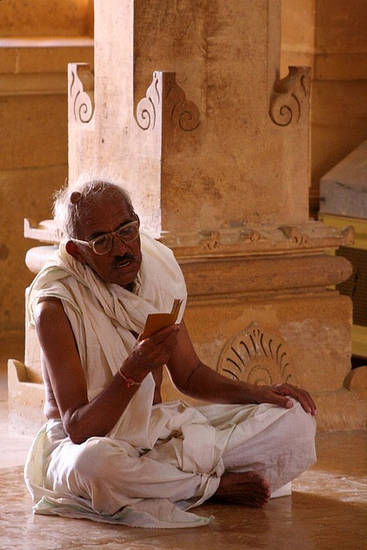 Praying in the temple
Image by nusohotrightnow – Nathaniel Whittemore © CC BY-NC-ND 2.0
Jains have a long history of hymn-writing and hymn-singing. Singing the praises of the Jinas is a key element of worship and forms a crucial part of most religious ceremonies.
Jains regularly sing hymns both solo and in groups, depending on the ritual. In temple rites, groups of singers may perform the sung parts of the ceremony or lead the congregation in a communal hymn. For example, Śankheśvar Dādā is a popular choice of a hymn to sing as a group during Jain liturgical worship. The choirs are usually single sex, their duties differing according to the sex of the members.
Devotional songs are sung at nearly all Jain rites that take place in public, such as renunciation of the householder life. The singers may be family members of the new monk or nun, professional singers or all the worshippers. In private homes, hymns are frequently sung in celebration, generally led by a single singer.
Other hymns are sung only on particular occasions. An example would be the mendicant welcome songs that lay Jains perform to honour ascetics before offering them alms.
Group and solo singing
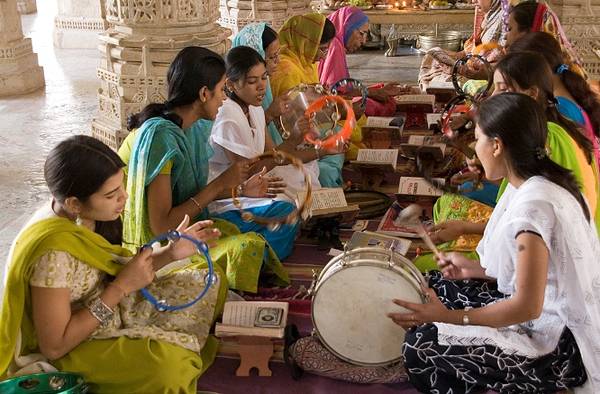 Women singing hymns
Image by Dey – Dey Alexander © CC BY-NC-SA 2.0
Jain religious songs are performed routinely as part of the morning worship. The liturgy of the morning worship includes a particular point at which the worshipper is expected to sing a hymn. This is usually sung solo but if a number of Jains performs the daily worship together, they will sing as a group.
As well as the daily prayer ritual, there are other liturgies, such as the Śvetāmbara Snātra Pūjā and Digambara Deva Śāstra Guru Pūjā, in which hymns have a central role. Additional devotional songs are usually also played. These ceremonies are usually communal, with the whole congregation singing hymns. In the sect of the Śvetāmbaras women’s singing groups are also hired to take part in these rituals on behalf of the sponsors.
Many Jain congregations have hymn-singing groups for either men or women. Some larger congregations have both men’s and women’s choirs. These groups sing hymns as a devotional act in a set schedule, but may also be available for hire for celebrations and to perform religious ceremonies. During the evening celebrations the choirs sing hymns but they also may perform veil songs – cunḍaḍī gīt.
On the whole, men’s choirs tend to perform devotional singing for evening celebrations and women’s groups are more likely to take part in the sung liturgies. The musicality of these two groups reflects these different practices. The men’s groups may make more use of amplification and electronic instruments while women’s choirs more usually perform a form of seated percussion dance with similarities to the Gujarāti folk dance genre, garba. Female choirs’ performances tend to be more associated with liturgical ceremonies.
Hymns in public rituals
Major Jain public rituals involve singing hymns. For example, the quintessential public rite of Jainism – the ordination of a Jain monk or nun – is accompanied by ordination songs – dīkṣā gīt. These hymns are sung by:- members of the renouncer’s family
- professional singers
- the congregation of Jains who have come to participate in the rituals linked with ordination.
Hymns in domestic rituals
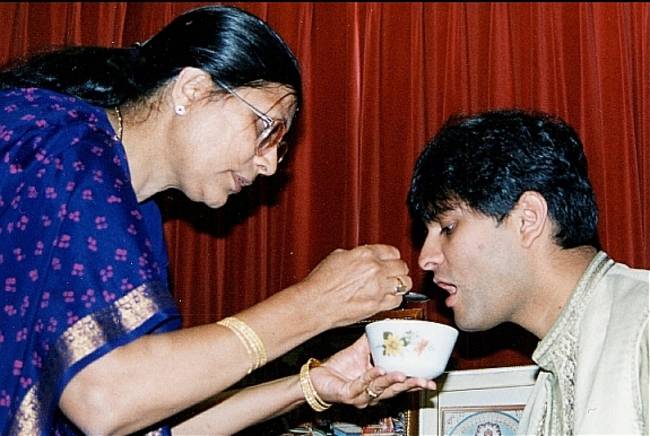
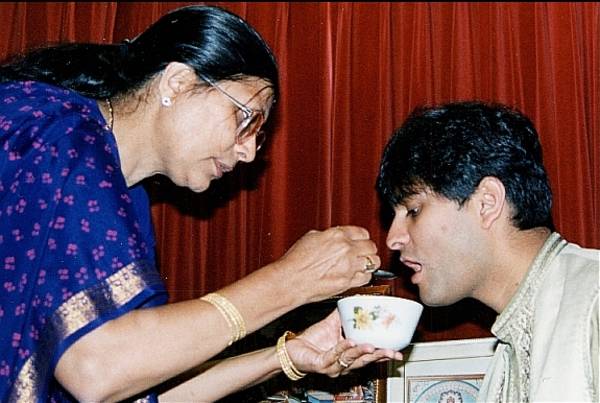 Completing a fast
Image by Chandu Shah © Chandu Shah
Some domestic Jain rituals are marked by singing religious songs. These may be specifically Jain rites, such as marking the breaking of a fast, or more broadly auspicious ceremonies, such as the birthday of a more senior relative. In these domestic liturgies, a solo singer leads the hymns and the rest of those present who know the songs join the singing in a call-and-response pattern.
Fast-breaking ceremonies may include performances by an established choir, a group of friends and relatives and individual singers. At these ceremonies fasting songs – tapasya gīt – celebrate the faster’s austerities and virtues. During difficult fasts, these may be sung in the faster’s home in order to support his or her efforts and promote a religious environment to make the fasting easier.
Other hymns and rituals
 Celebrating initiation
Image by Jayesh Gudka © Jayesh Gudka
Some types of hymns are performed in particular ritual contexts. For example, lay Jains sing mendicant welcome songs – sādhu swāgatam gīt or gahuli gīt – on three specific occasions. Firstly, the hymns salute mendicants when they join a congregation for the rainy season retreat. Secondly, the hymns are sung to honour ascetics before they give a sermon. Thirdly, householder Jains perform these songs before offering food to a mendicant.
Auction songs – boli gīt – are performed during ritual auctions. These take place during Jain festivals and public ceremonies, particularly the festival of Paryuṣaṇ. Ritual auctions are also part of the ceremonies surrounding the renunciation of a new monk or nun.